The Library of Celsus at Ephesus
Postcards from home

Ephesus Photos

Scenes from the places we visit every week — and never tire of.

Through local eyes

Scenes from Ephesus and around

A taste of what you will see with your own eyes — click any photo to enlarge.

The Library of Celsus, the icon of Ephesus
A modern concert in the Grand Theater — 25,000 seats, still working
Curetes Street, the marble spine of the ancient city
Frescoed walls and painted cupids in the Terrace Houses, homes of Ephesus's wealthiest
Lion mosaic in the Terrace Houses
Candles burning beside the chapel at the House of the Virgin Mary, in the hills above Ephesus
Fresh simit and grapes shared with pilgrims at a feast-day gathering
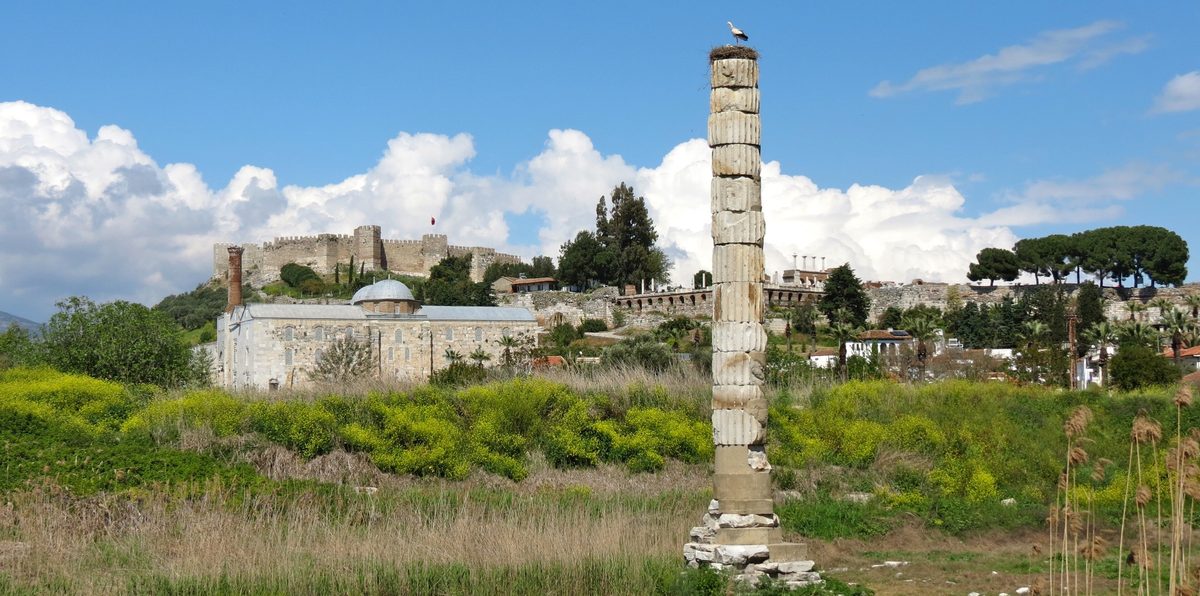
A model of the Temple of Artemis as it once stood — today a single column marks the Wonder
The tomb of Saint John, marked in marble inside his basilica at Selcuk
Isa Bey Mosque in Selcuk, a Seljuk masterpiece of 1375
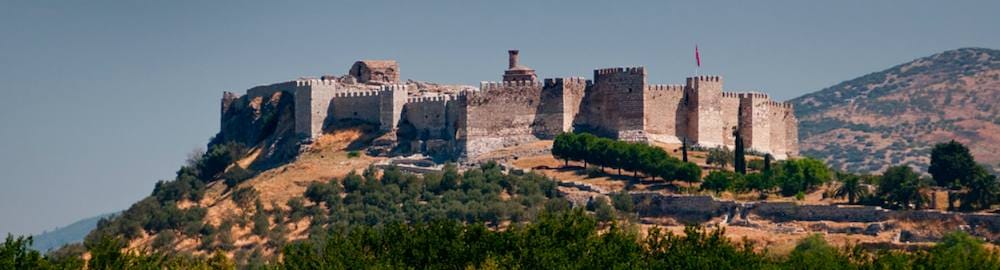
Ayasuluk Fortress crowning the hill above Selcuk
Sirince Village, famous for its hillside houses and fruit wines
An ice cream vendor in Sirince
The Odeon, concert hall of ancient Ephesus
Koressos Gate of Ephesus
The theater on the acropolis of Pergamon, above modern Bergama
The sacred way of the Asclepion, the ancient world's famous hospital
The Temple of Apollo at Didyma
The Great Theater of Miletus, a Byzantine castle built on its crest, in the city that was once a great Ionian port
The tiered stone seating of the Great Theater of Miletus, seen from the orchestra
The white travertine terraces of Pamukkale
Cleopatra's Pool at Hierapolis
Kusadasi from the air — the cruise piers, the marina and the old town, the port of Ephesus
The vaulted arcade beneath the Roman agora of Izmir, ancient Smyrna
Turkish village breakfast — the proper start to any tour
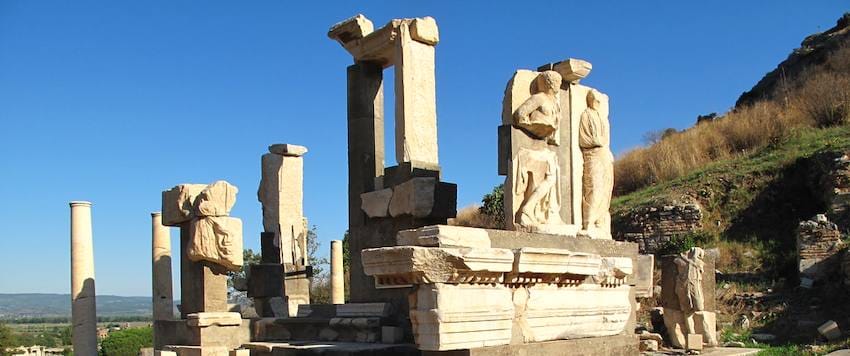
The Memmius Monument in Ephesus, its marble piers and carved figures standing against a clear blue sky.
The Memmius Monument, a first-century BC memorial that marks the western end of Curetes Street in Ephesus.
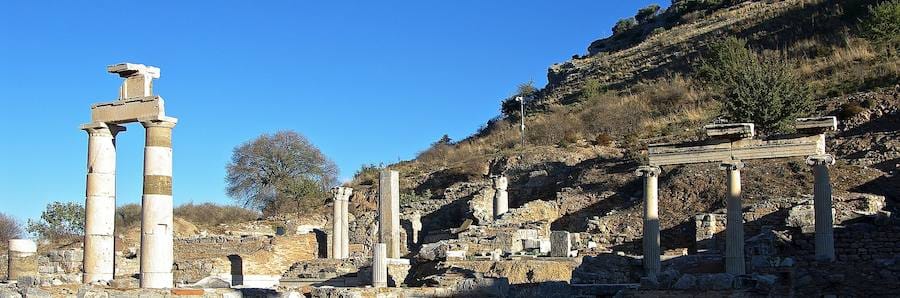
Re-erected columns and architraves of the Prytaneum at Ephesus below a dry hillside under a deep blue sky.
The Prytaneum at Ephesus, the city hall where the sacred fire of Hestia was kept burning, stands re-erected against the slope of Panayirdag.
The two carved relief pillars of the Hercules Gate framing the marble paving of Curetes Street at Ephesus.
The two surviving relief pillars of the Hercules Gate still frame the point where Curetes Street narrows on its way down through Ephesus.
The restored pediment and columns of the Roman Fountain of Trajan at Ephesus against a blue sky and a green hillside.
The Fountain of Trajan on Curetes Street, where a colossal statue of the emperor once stood above a wide marble basin.
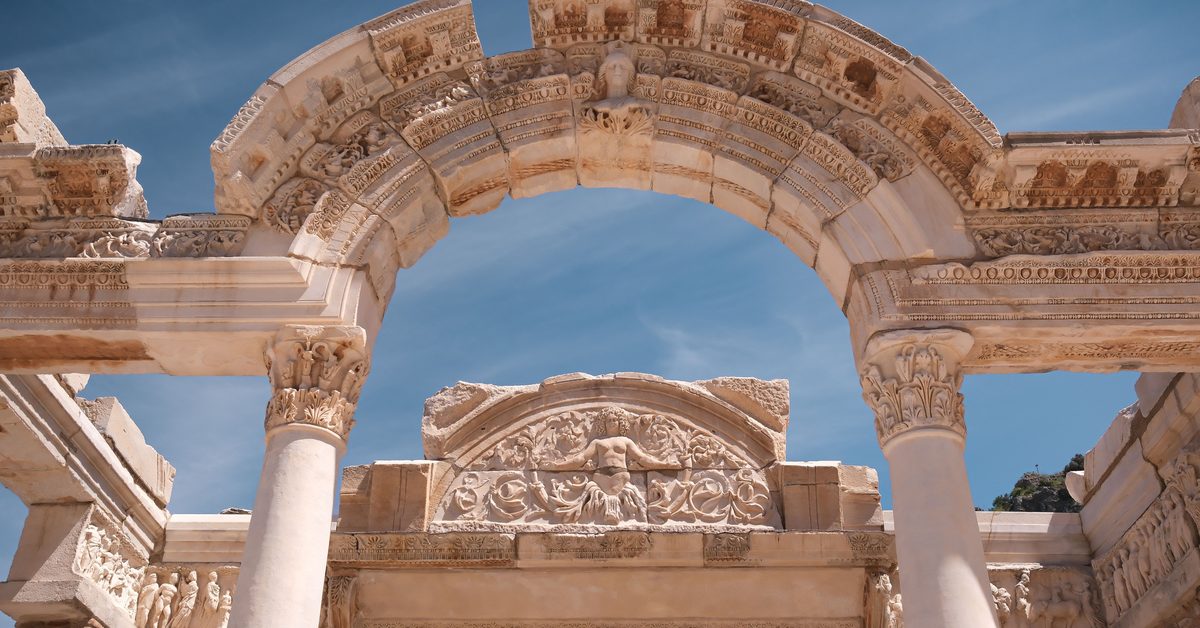
Carved arch of the Temple of Hadrian in Ephesus with a female bust on the keystone and a relief figure among scrolls behind it.
On the Temple of Hadrian, a goddess bust crowns the keystone of the arch while a second female figure rises from acanthus scrolls on the panel behind.
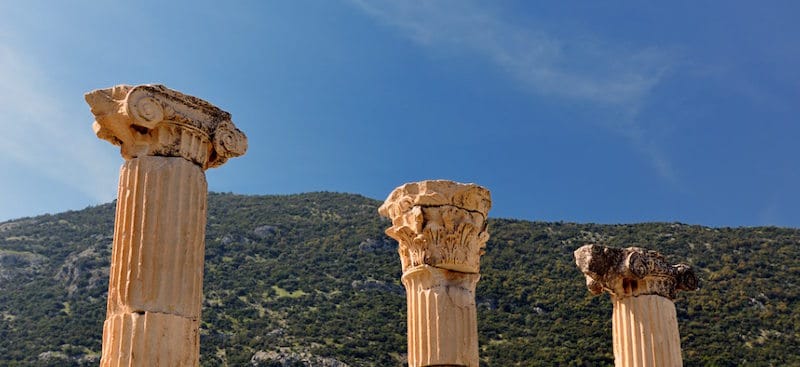
Three ancient column capitals, one Ionic and two Corinthian, rise against a deep blue sky above a green hillside.
Three capitals stand in a row against the hillside, the nearest carved in the Ionic order and the others with Corinthian acanthus leaves.
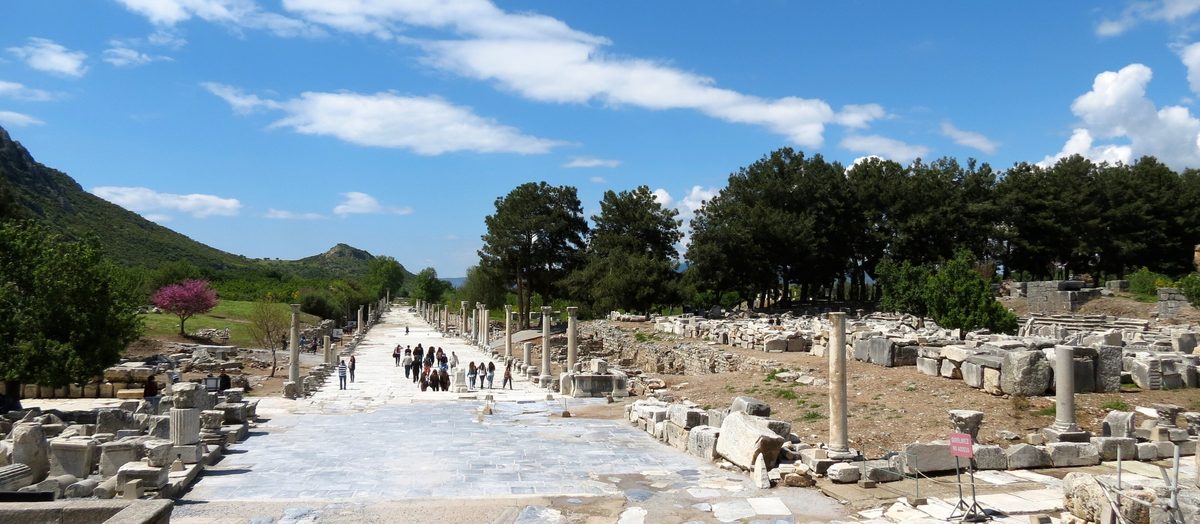
Two rows of standing columns line the broad marble street at Ephesus that once ran down to the harbor, with the hills of Selcuk beyond.
Columns still line the marble street that once carried traders from the commercial agora down toward the harbor of Ephesus.
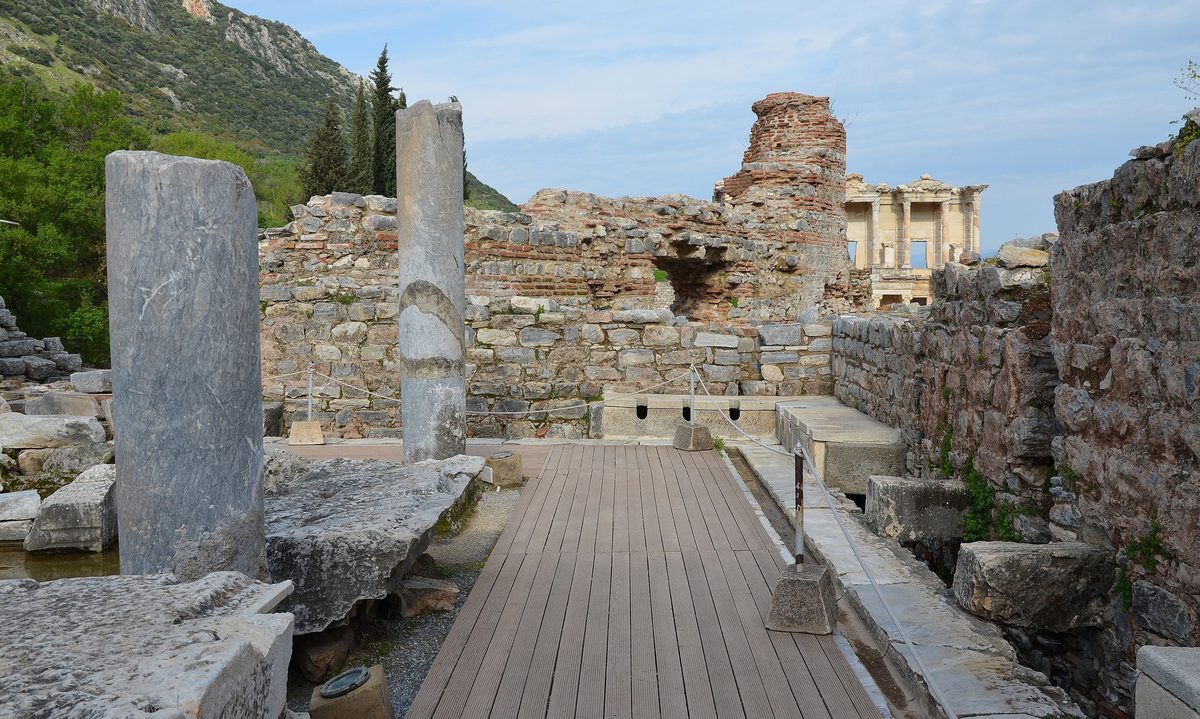
The Library of Celsus at Ephesus seen down the walkway past the marble seats of the ancient public latrines.
The restored facade of the Library of Celsus, seen from the raised ground beside the ancient public latrines.
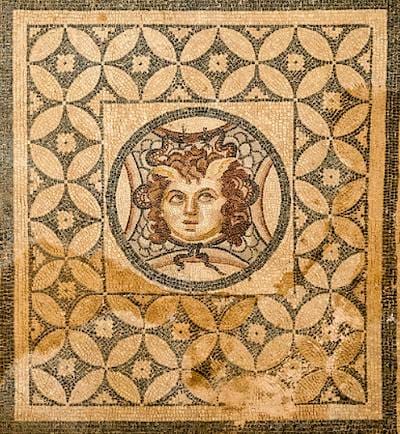
Roman floor mosaic showing a winged Medusa head in a round medallion framed by an interlocking circle pattern.
A Medusa head, snakes knotted under her chin, guards the center of a mosaic floor in the Terrace Houses of Ephesus.
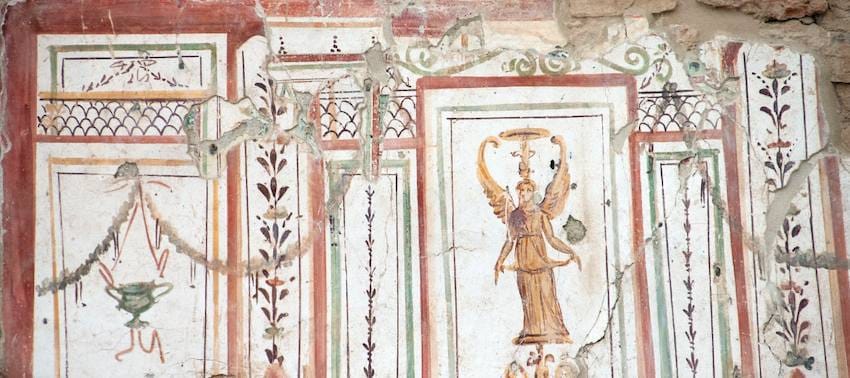
Roman wall fresco in the Terrace Houses of Ephesus with a winged figure painted between red and green panel borders.
A winged Nike painted on a wall of the Terrace Houses, still holding her colors after nearly two thousand years.
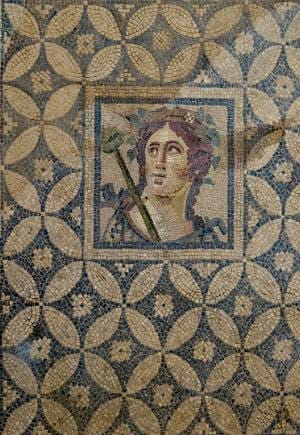
Roman mosaic panel of a youthful Dionysus wearing a grape and ivy wreath and holding a thyrsus staff.
Dionysus, crowned with grapes and ivy and carrying his thyrsus, worked in mosaic in the Terrace Houses of Ephesus.
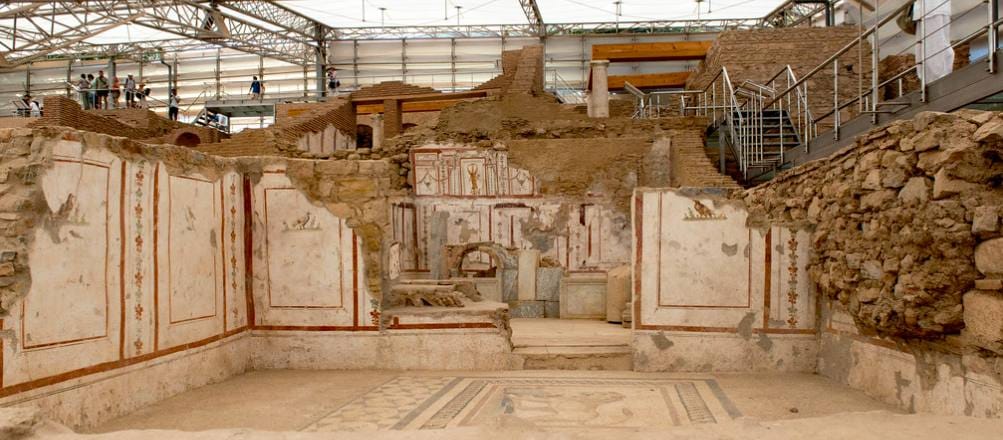
Roman room at the Ephesus Terrace Houses with red-paneled wall frescoes and a geometric mosaic floor.
Painted wall panels and a geometric mosaic floor still survive in one of the excavated houses beneath the modern roof.
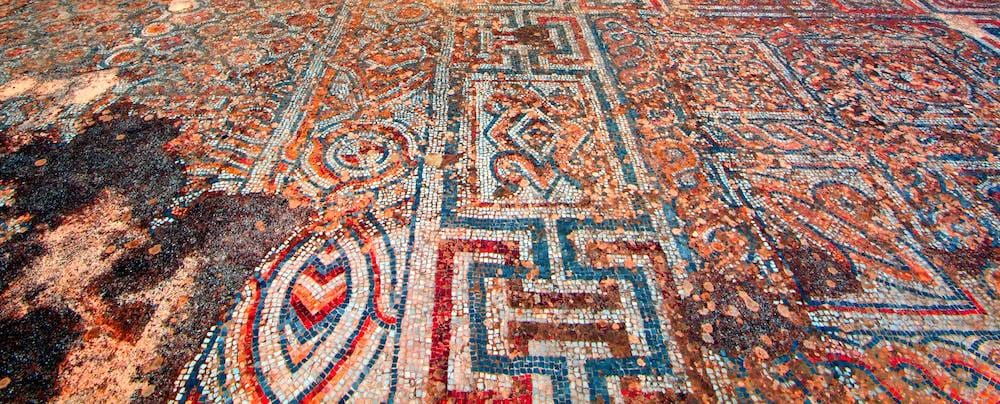
Ancient geometric floor mosaic in red, cream and blue with meander and chevron patterns, laid in small stones.
The mosaic sidewalk facing the Temple of Hadrian, whose geometric bands echo the patterns of Turkish carpets woven today.
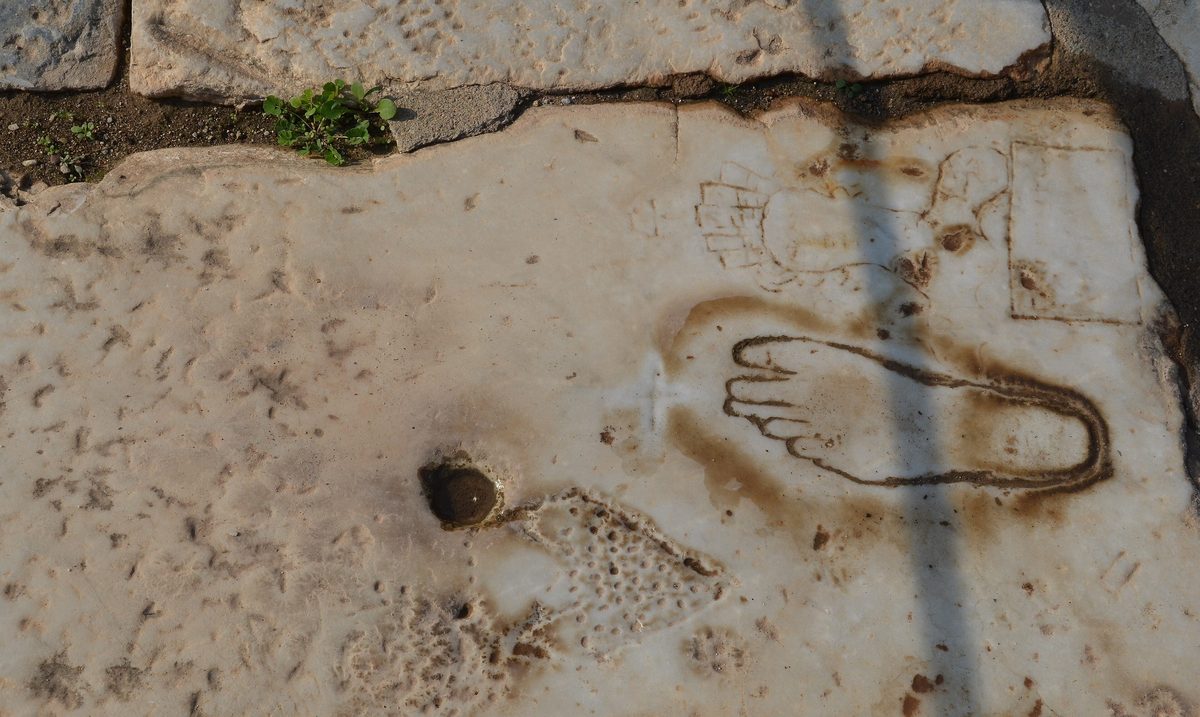
Ancient graffiti carved into a marble paving slab at Ephesus, showing a footprint and a female figure.
Carved into the marble paving at Ephesus, this footprint and female figure are among the site's most talked-about ancient graffiti.
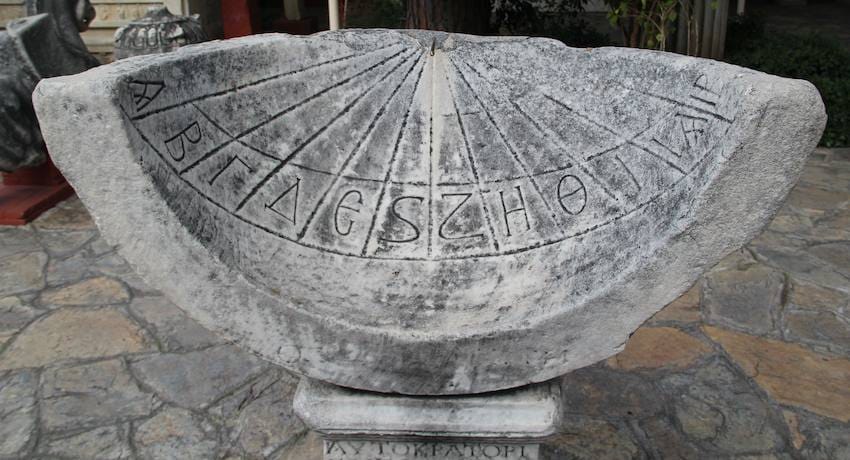
Semicircular ancient marble sundial carved with Greek letters and hour lines, displayed outdoors on a stone plinth.
An ancient marble sundial, its hour lines and Greek letters still crisp, displayed in the open-air garden of the Ephesus Archaeological Museum in Selcuk.
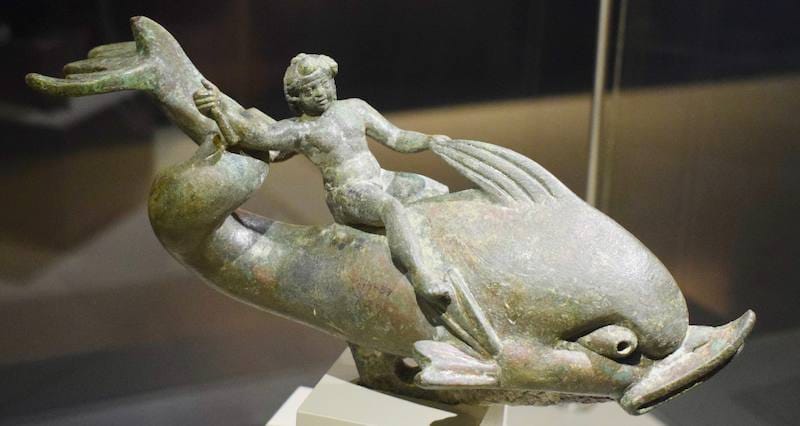
Bronze statuette of Eros riding a dolphin displayed in a case at the Ephesus Museum
The bronze Eros riding a dolphin, one of the small masterpieces on display at the Ephesus Museum.
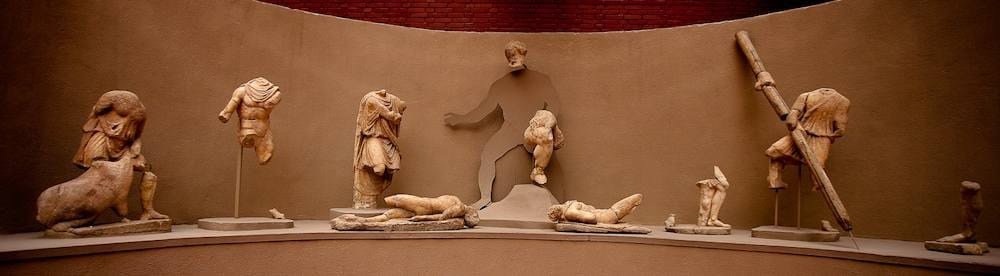
Marble figures of the Polyphemus statue group arranged in a curved niche at the Ephesus Archaeological Museum.
The Polyphemus group recovered from Domitian Square, reassembled in the Ephesus Archaeological Museum with a silhouette standing in for the missing giant.
The single re-erected column of the Temple of Artemis rising from the marshy field, a stork nesting on its capital, with Ayasuluk Fortress and the Isa Bey Mosque behind.
One re-erected column in a marshy field is all that stands above ground of the Temple of Artemis, once one of the Seven Wonders of the ancient world.
The crenellated walls and towers of Ayasuluk Fortress on a hill above Selcuk, surrounded by olive trees.
Ayasuluk Fortress crowns the hill above Selcuk, looking out over the olive groves and the valley of ancient Ephesus.
The carved marble entrance portal of the Isa Bey Mosque in Selcuk seen from below, its muqarnas hood and inlaid marble panels in close view
The carved marble portal of the Isa Bey Mosque in Selcuk, one of the finest surviving doorways of its period.
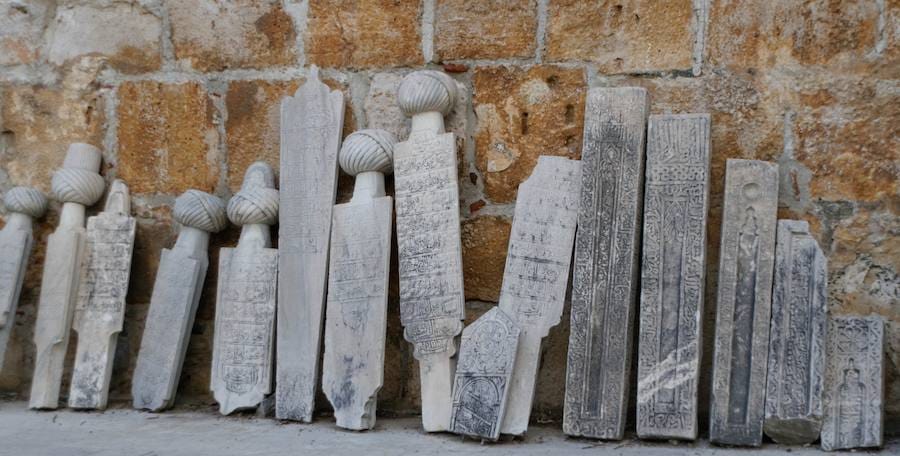
Carved Ottoman marble tombstones, several topped with stone turbans, leaning in a row against an old stone wall.
Ottoman gravestones, several crowned with carved turbans, lean against the old stone wall where they are displayed in Selcuk.
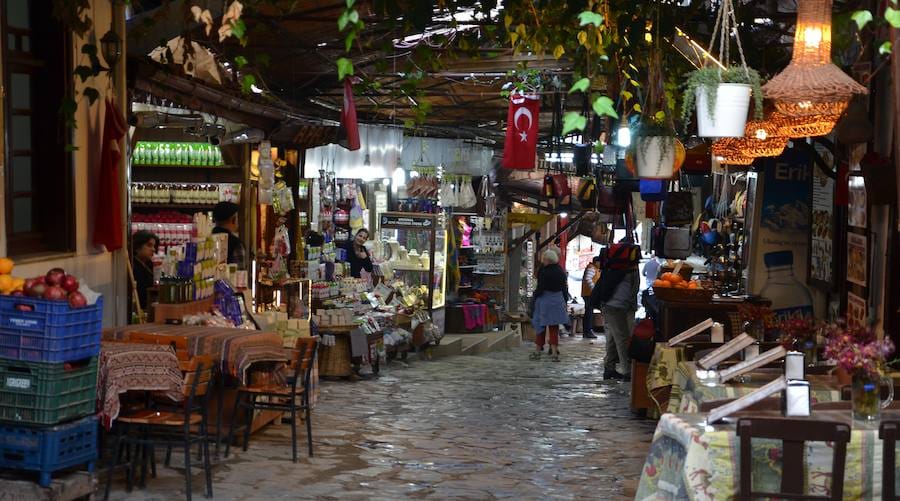
Narrow cobbled lane in Sirince village lined with small shops selling local goods under vines and hanging lanterns.
A shaded shopping lane in Sirince, where village producers sell fruit wine, olive oil and handmade soap side by side.
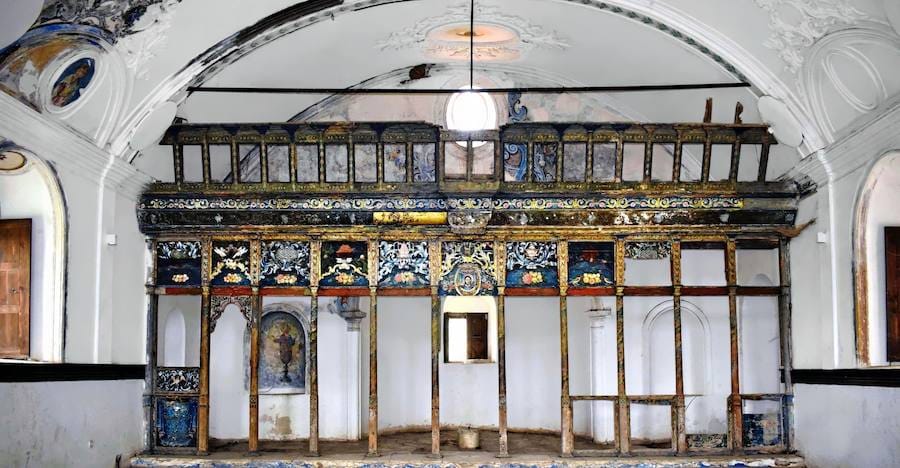
Interior of an abandoned Greek Orthodox church in Sirince with a stripped wooden iconostasis still showing blue and gold painted panels.
Inside the old Greek Orthodox church of Sirince, the painted wooden screen still carries its blue and gold panels, though the icons themselves are long gone.
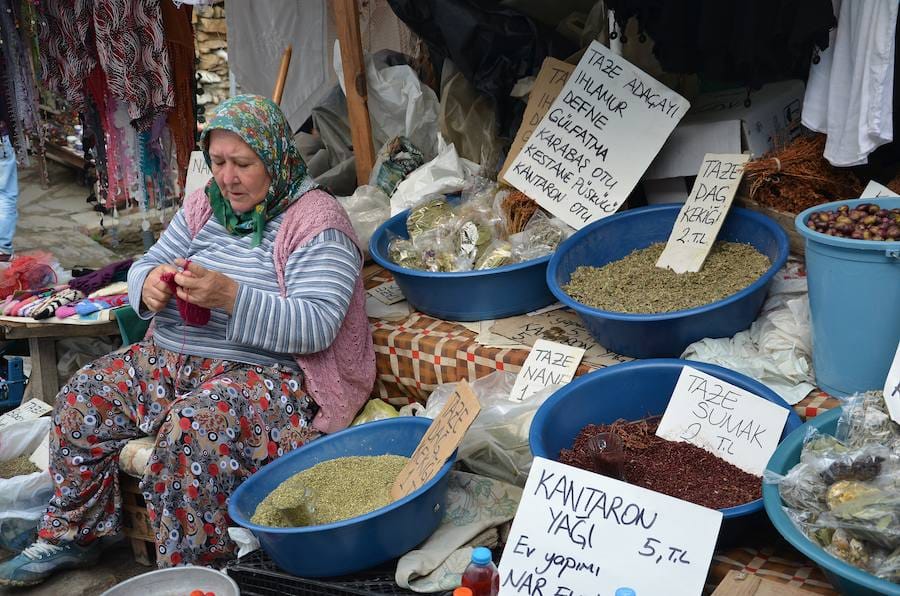
A woman in a headscarf knits beside basins of dried herbs and handwritten Turkish price signs at her village street stall.
A village vendor knits between customers, surrounded by basins of dried sage, thyme, linden flower and sumac, each with its own handwritten price.
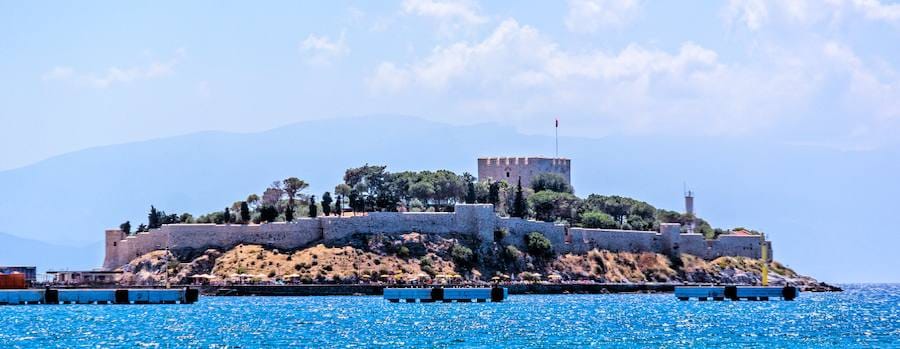
Pigeon Island in Kusadasi with its Ottoman-era stone fortress walls and tower seen across the blue Aegean Sea.
Pigeon Island (Guvercinada) guards the harbor of Kusadasi, its Ottoman-era walls and flag tower rising just a short walk from the cruise pier.
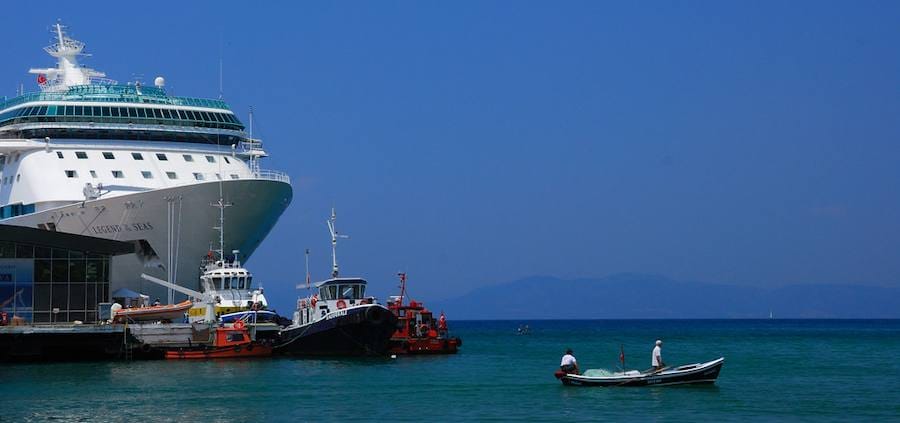
A small wooden fishing boat with two fishermen on the turquoise water of Kusadasi harbor beside a moored cruise ship.
A working fishing boat crosses Kusadasi harbor in the shadow of a cruise ship at the pier.
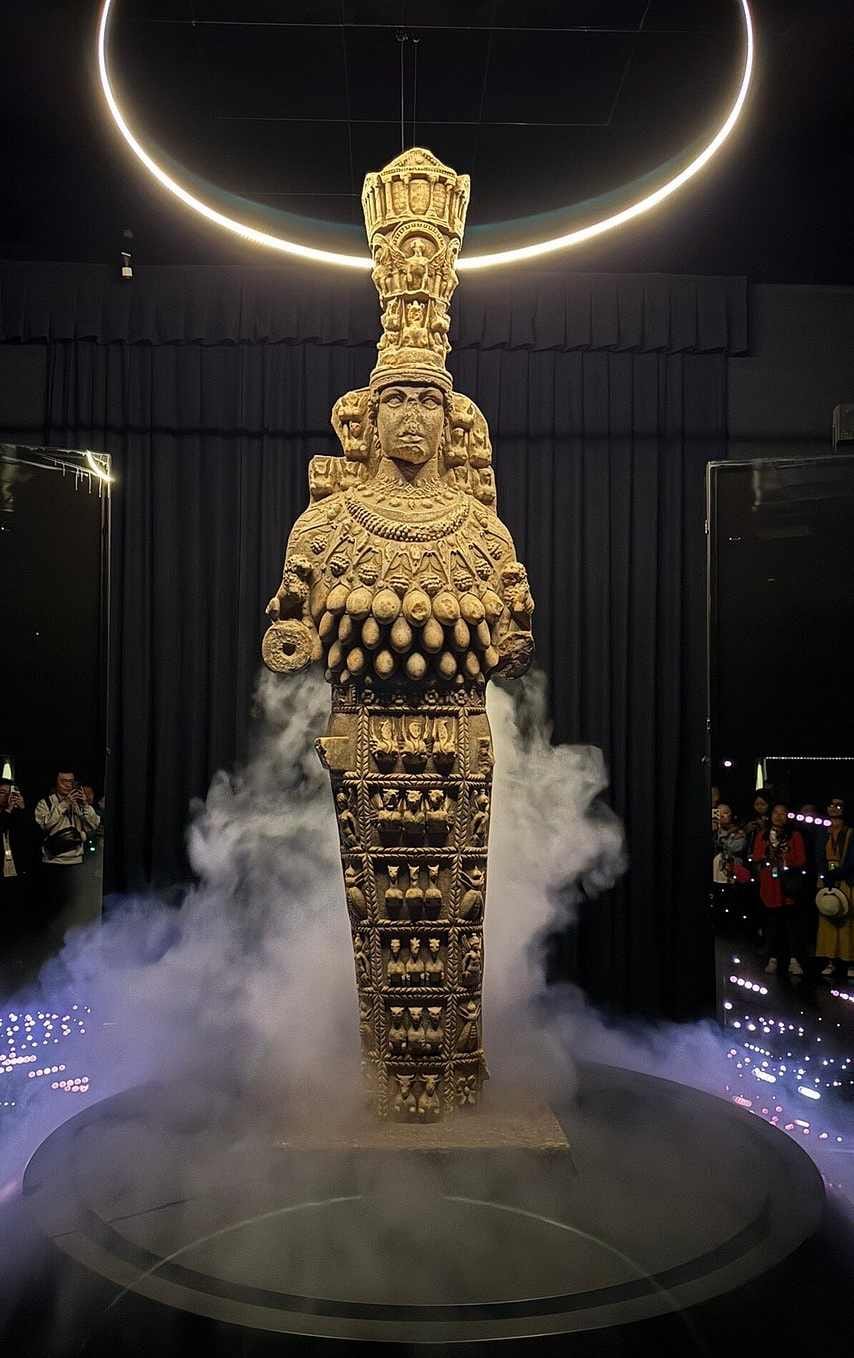
Full-size replica of the Ephesian Artemis statue lit on a circular platform amid drifting mist.
A full-size replica of the Ephesian Artemis, the many-breasted goddess whose original stands in the Ephesus Archaeological Museum.
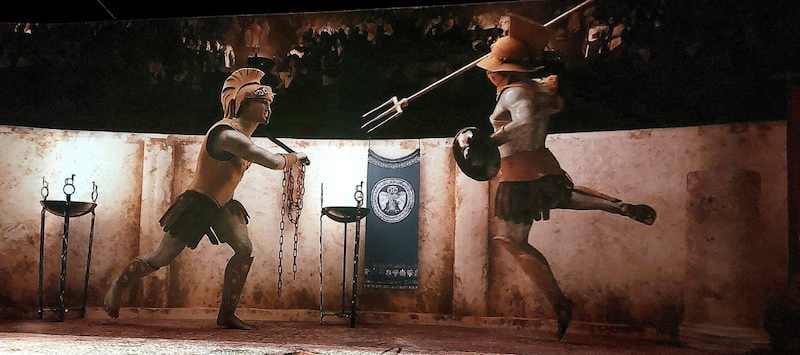
Two projected gladiators, one with a sword and one with a trident, facing off on a curved arena wall.
Gladiators face each other again in light and sound, a bloodless retelling of the games Ephesus once staged.
Ephesus Ancient City, visited on our private tours from Kusadasi and Izmir

Ready to step into these photos?

Every one of these places is on our tours. Come see them in person, with a local guide who knows the story behind each stone.

  • TÜRSAB No. 15746
  • No prepayment
  • Skip-the-line included
  • Reply within 24 h