
 Must see
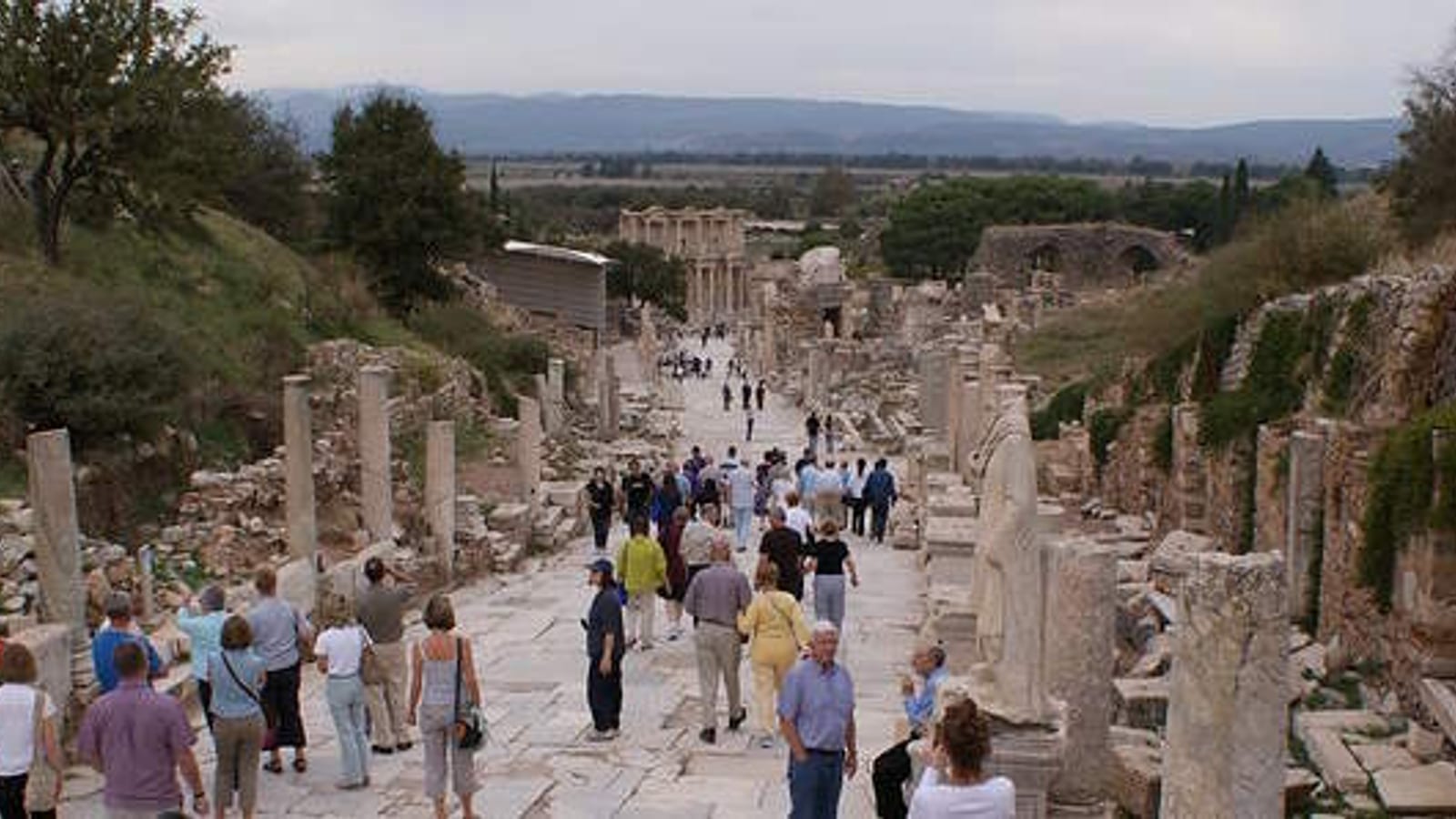
Ephesus Ancient City
The marble capital of Roman Asia, home to perhaps 34,000 to 72,000 people: library, theater, temples and streets that still feel inhabited.
Every wonder within reach of Ephesus — described by the people who grew up next door to them.
Must see
The marble capital of Roman Asia, home to perhaps 34,000 to 72,000 people: library, theater, temples and streets that still feel inhabited.
 Local favorite
Seven Roman villas under one protective roof, their frescoes and mosaics astonishingly intact. The sight most visitors wrongly skip.
 Icon
Icon
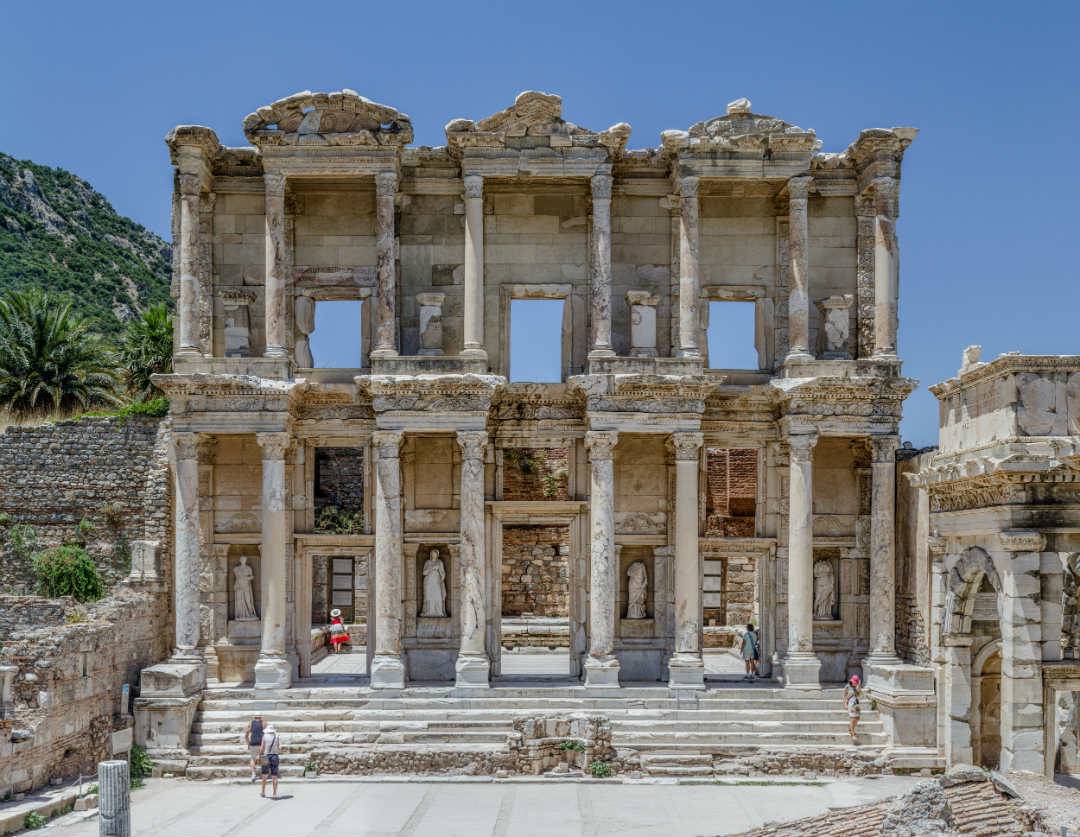
The third-greatest library of the ancient world — and secretly a mausoleum. The building every visitor comes for.
 Must see
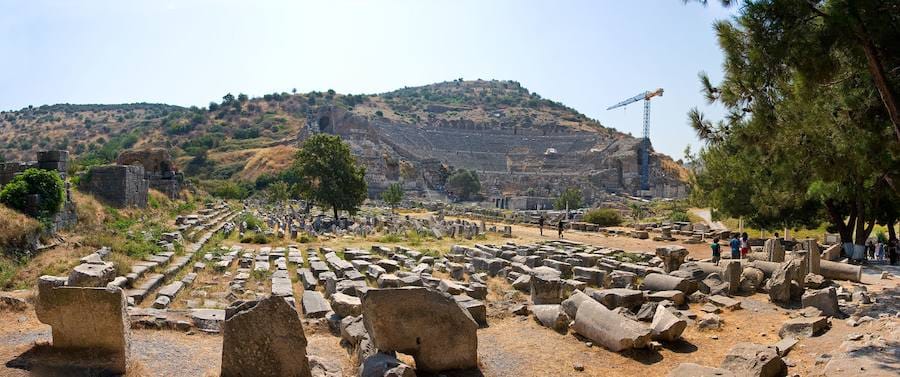
The 25,000-seat giant where Saint Paul faced a screaming crowd — and where the acoustics still carry a whisper to the top row.
 The classic walk
The sloping avenue at the heart of Ephesus — temples, fountains, shops and three thousand years of footsteps underfoot.
 Local favorite
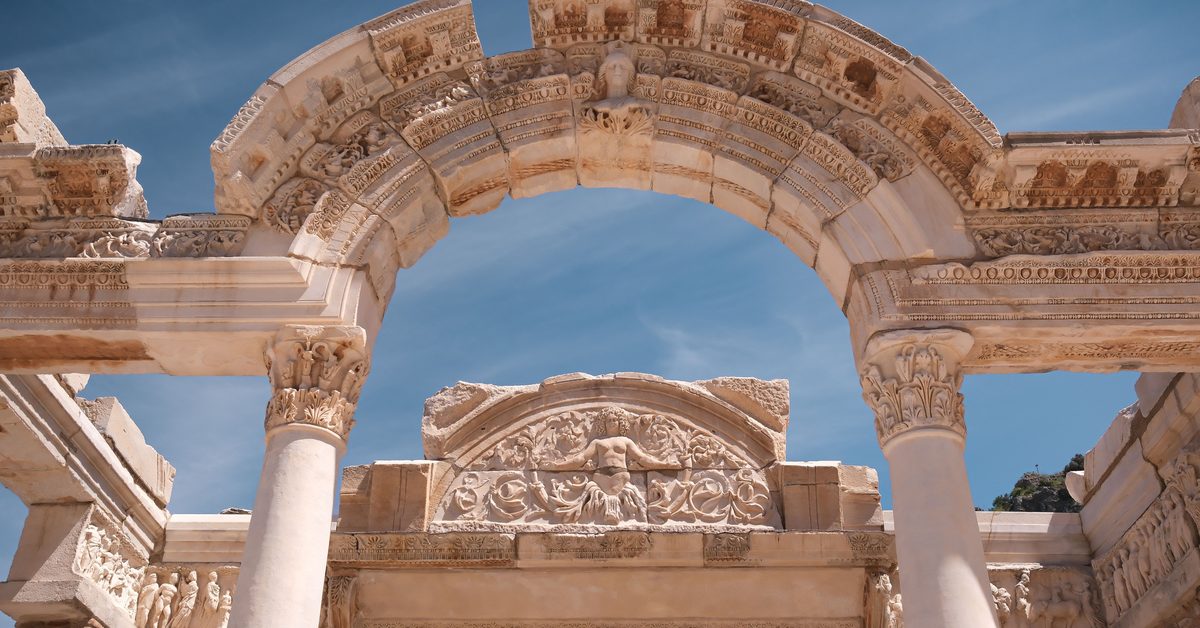
The jewel-box temple on Curetes Street — Tyche on the arch, Medusa over the door, and the legend of the city's founding in its friezes.
 First stop
The intimate marble hall where the city council governed by day and musicians played by night — your first monument inside the upper gate.
 Walk this way
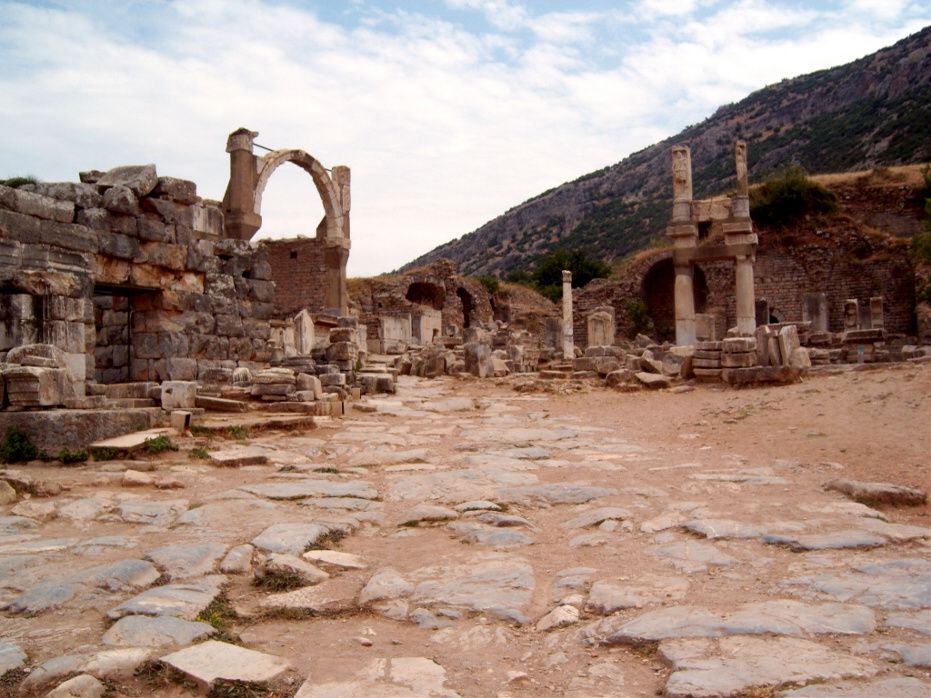
The grand marble avenue between the Library and the Theater — wheel ruts, the carved footprint everyone calls an advertisement, and a gate built by two grateful freedmen.
 A dark tale
The first imperial cult temple of Ephesus, its colossal statue — and the remarkable story of how a murdered emperor was deleted from history.
 Look closer
A monumental fountain with the emperor's foot on the globe — proof in marble that the Romans knew the earth was round.
 Guests' favorite story
Three floors of Roman bathing culture and the sociable marble latrines beside them — the corner of Ephesus everyone remembers.
 Small but mighty
The hero in his lion skin guards the top of Curetes Street — a gate designed to keep carts out of downtown, two millennia before car-free city centers.
 Follow the money
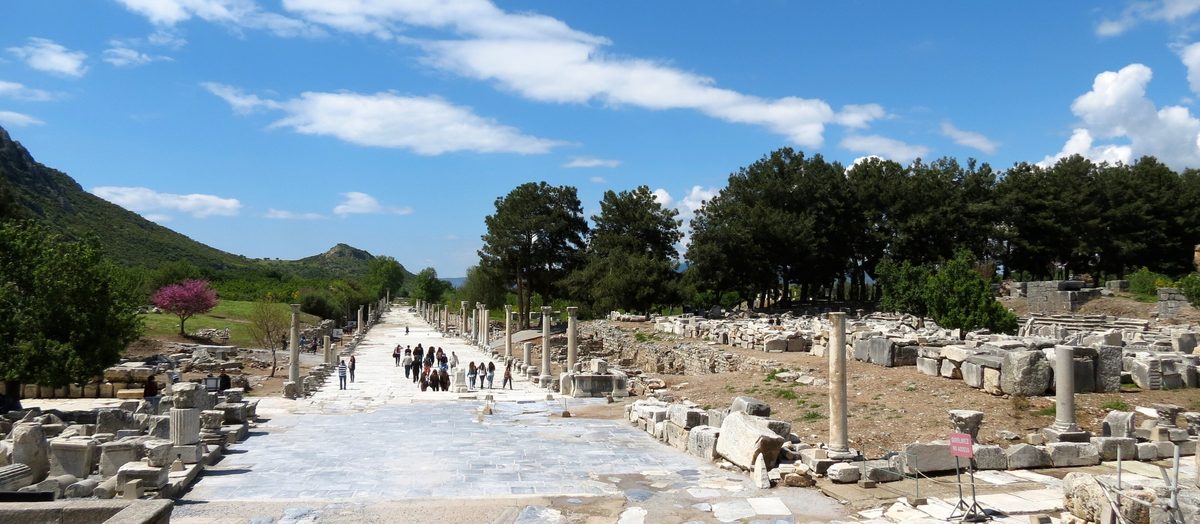
The vast market square where three continents traded, and the illuminated marble boulevard that once ran to the sea itself.
 Turning point
The first church ever dedicated to the Virgin Mary — and the hall where the Council of Ephesus proclaimed her Theotokos in AD 431.
 Legend
The grotto where seven persecuted youths reportedly slept for two centuries — a legend shared by Christianity and Islam, five minutes from Ephesus.
 New
New
An immersive projection museum standing between the Great Theater and the Library of Celsus. What happens inside, who loves it, who should skip it.
 Pilgrimage
Fee, hours, dress code and what to expect at the hillside house where tradition holds Mary lived — visited by three popes and included on our private tours.
 Seven Wonders
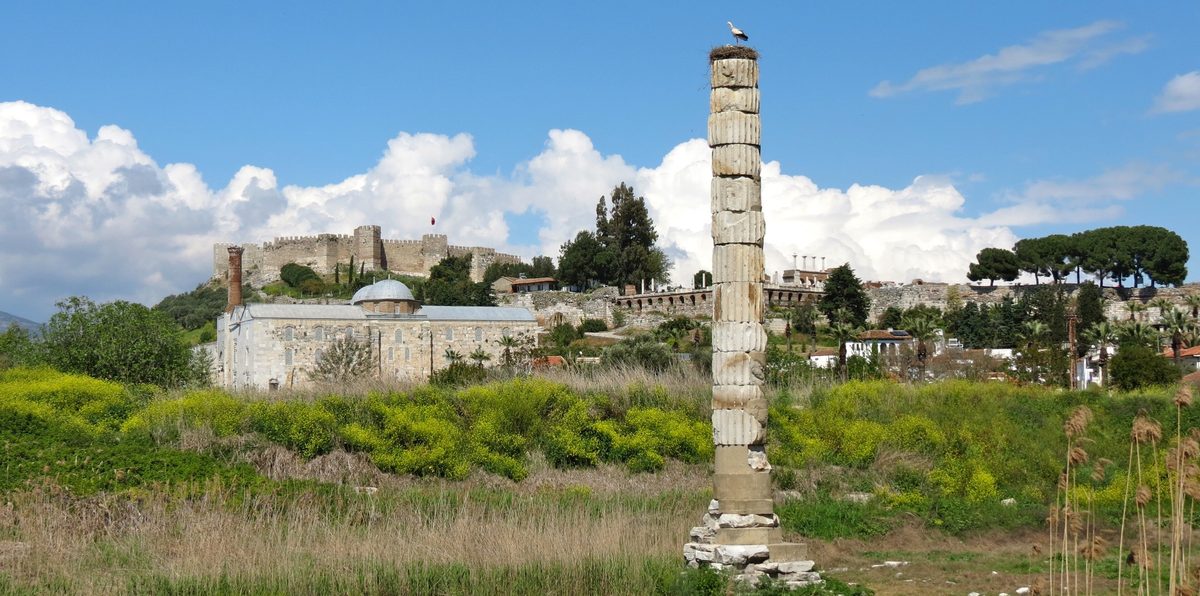
One of the Seven Wonders of the Ancient World: what is left of the Temple of Artemis (Temple of Diana), why it made the list, and how to see it — and its statues — on a private tour.
 Sacred site
Justinian's great basilica over the tomb of Saint John the Evangelist, with the finest view over Selcuk thrown in.
 Living heritage
A jewel of Seljuk architecture from 1375, still an active mosque — and the calmest courtyard in Selcuk.
 Indoor gem
Home of the famous Artemis statues, gladiator reliefs and the emperor's colossal head — Ephesus's portable treasures under one roof.
Best view
The citadel above Selcuk where Ephesus was born: Bronze Age Apasa, Justinian's basilica, a Byzantine-to-Ottoman castle and the finest panorama on the coast.
 Village charm
Whitewashed houses, fruit wines and lazy lanes 8 km above Selcuk — what to do in Sirince and how we pair it with Ephesus in one private day.
 Philosophy's cradle
The great port that gave the world its first philosopher — with a 15,000-seat Roman theater still standing proud.
 Colossal
One of antiquity's greatest oracles and most colossal temples — its column drums wider than a dinner table.
 Dramatic
The mountaintop capital: the ancient world's steepest theater, the Zeus altar terrace and Revelation's "Satan's Throne."
 Fascinating
Antiquity's most famous hospital, where Galen healed gladiators with springs, dreams and a whispering tunnel.
 Cruise port
Where cruise ships dock in Kusadasi, the terminal address, where your guide waits, the drive to Ephesus and which tour fits your hours ashore.
 City break
Ancient Smyrna turned modern metropolis — Roman agora, the legendary Kemeralti quarter and the most relaxed seafront in Turkey.
Any of these sites can be woven into your private Ephesus tour. Tell us your wish list — and browse our tour photos to see them first.