

Sirince is a hillside village of about 450 people, 8 km east of Selcuk and about 15 minutes by car from Ephesus, famous for its Greek Orthodox stone houses, its fruit wines and an unhurried pace that makes it the natural second half of an Ephesus day. There is no entrance fee; you simply arrive, walk, taste and stay too long.
Things to do in Sirince
- Taste the fruit wines in the tasting rooms along the main lane — apricot, mulberry, blackberry, raspberry, peach, cherry, pomegranate and more, poured without ceremony.
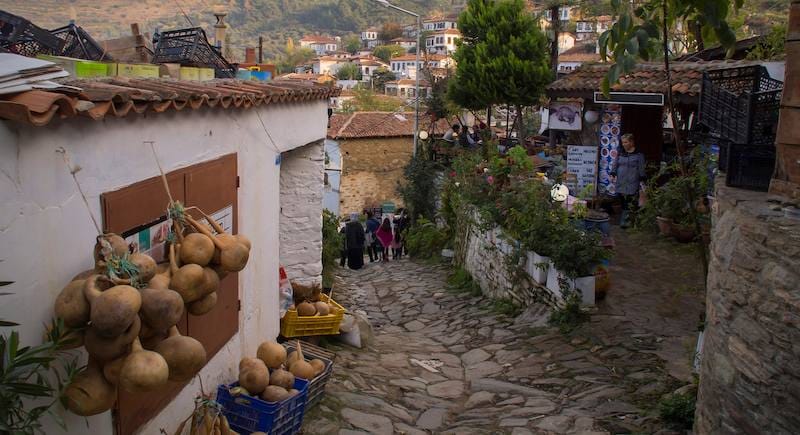
- Walk the lanes of 19th-century houses stacked up the slope: whitewashed walls, timber frames, red roofs and vines over every doorway.
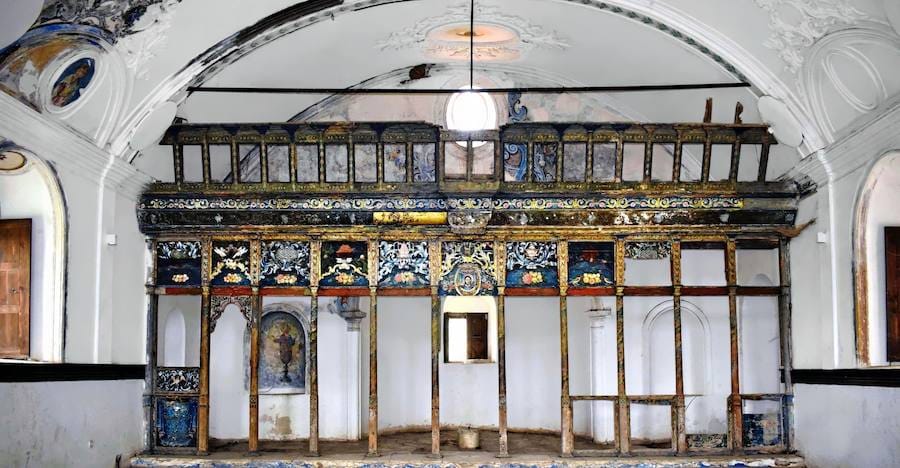
- Look into the churches. Two Orthodox churches survive from the Greek village — Saint John the Baptist and Saint Demetrios — one restored, both quietly moving.
- Buy from the makers: olive oil pressed in the village, lace worked on doorsteps, dried fruit and herbs from the orchards around.
- Climb for the view. A few extra steps above the main square give you the whole village and the valley towards Ephesus.
- Eat a long lunch in a courtyard restaurant — village cooking, whatever is local and fresh that day — and let the afternoon go.
Sirince wine
Fruit wine is the village's signature. The vineyards on the slopes give grape wine too, but what the tasting rooms are known for is the fruit list: apricot, blueberry, mulberry, melon, blackberry, raspberry, strawberry, peach, green apple, cherry, pomegranate and kiwi, depending on the season and the maker. Tastings are relaxed and free of pressure — try three or four, buy the one you like, or none. A bottle of quince or pomegranate wine riding home in your bag is the classic Sirince souvenir.
How to get to Sirince from Ephesus, Selcuk and Kusadasi
| From | Distance | Time by car |
|---|---|---|
| Selcuk town center | 8 km east | About 15 minutes |
| Ephesus (lower gate) | About 8 km | About 20 minutes via Selcuk |
| Kusadasi cruise port | About 28 km | 35–45 minutes |
| Izmir airport (ADB) | About 68 km | Roughly 1 hour |
The road winds up through orchards and pine; minibuses run from Selcuk, and taxis wait in the town. On our tours the private vehicle simply continues from the ruins, so the transfer is part of the day, not a task.

A short history of Sirince
Until 1923 this was a Greek Orthodox village of more than a thousand houses that grew rich in the 19th century on figs and tobacco. Its Greek name was Kirkintzes and its Turkish name Cirkince, "ugly" — the story goes that the villagers chose it to keep outsiders away. In the population exchange of 1923 the Greek families left for Greece, where their descendants live mainly in Nea Efesos near Thessaloniki, and Muslim settlers arrived from the Kavala region of Greek Macedonia. In 1926 the governor of Izmir renamed the village Sirince, "pleasant" — at least honest advertising. In December 2012 tens of thousands were expected here when doomsday believers decided the village would survive the end of the Mayan calendar; the world carried on, and so did the wine.
Ephesus and Sirince village tour: how the day works
- 08:00–08:30 pickup at your Kusadasi or Selcuk hotel or at the cruise port, with a name sign.
- Ephesus first, through the upper gate and downhill, while the marble is cool and the crowds are still on their coaches — priority entrance, tickets bought for you at the gate price.
- Up to Sirince in the late morning: a guided walk through the lanes and the churches, then time on your own for tastings and shopping.
- Lunch — included, cooked by local cooks from whatever is fresh that day.
- Back at your hotel or ship by mid-afternoon, with a comfortable buffer for cruise guests.
Sources & further reading
- Wikipedia: Sirince — population, names and the 2012 episode, cross-checked
- Turkish Archaeological News: Sirince — the Greek Orthodox village, the exchange of 1923 and the churches
- GoTurkiye — the official tourism portal
See Sirince Village near Ephesus on these tours
Keep reading
See all attractions around EphesusAyasuluk Hill: the Castle, the Basilica and the First Ephesus
The citadel above Selcuk where Ephesus was born: Bronze Age Apasa, Justinian's basilica, a Byzantine-to-Ottoman castle and the finest panorama on the coast.
Miletus Ancient City
The great port that gave the world its first philosopher — with a 15,000-seat Roman theater still standing proud.