
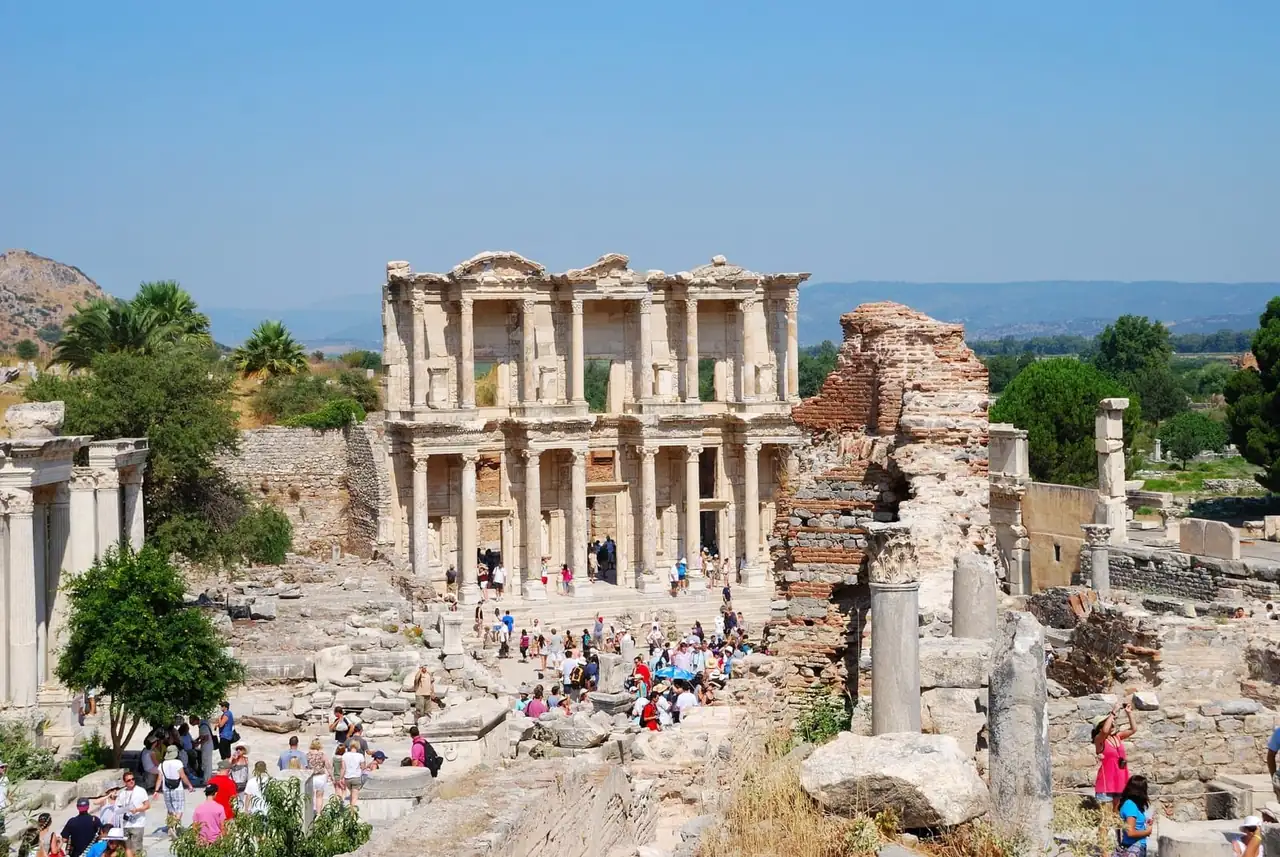
The most common question in our inbox, and the one we enjoy answering most: when should we come? The honest answer is that Ephesus rewards every season differently — but there are real strategies, and after decades of guiding here we hold them with some conviction.
The seasons, ranked by a local
April, May, September and October are the sweet spot, and if you have full freedom of dates, aim there. Spring covers the ruins in poppies and camomile — the marble photographs beautifully against red and white — and temperatures sit in the pleasant twenties. Autumn trades flowers for golden light and warm, swimmable seas at nearby Pamucak. June through August works perfectly well if you respect the heat: this is the Aegean, mid-thirties Celsius is normal, and the marble bounces sunlight back at you like an oven floor. Summer visits belong in the early morning or late afternoon, full stop. Winter is our secret season — mild, green, occasionally rainy, and so quiet you may share the Library of Celsus with nobody but the site's famous cats. Bring a light raincoat and enjoy owning an ancient city.
The hours matter more than the months
Whatever the season, the daily rhythm is the same. The site typically opens at eight in the morning (hours shift slightly by season — check current times when you book, or let us handle it). From roughly ten until two, tour buses and cruise groups dominate; by mid-afternoon the tide goes out again. So the formula is simple: be at the gate at opening, or come after three. Cruise guests have less flexibility, which is exactly why our shore excursions leave the port the moment you clear the gangway — those first ninety minutes are worth gold.
Photographers, note the geography: the Celsus facade faces east and glows in morning sun; the view down Curetes Street is best in the softer, low light of late afternoon. If a summer evening event or concert coincides with your dates, take it — the theater after dark is another world.
Is there any shade at Ephesus in summer?
We say it with affection: in high summer Ephesus is a stone oven. The pale marble of Curetes Street and the Library square throws the sun back up at you, and between the two gates there is almost nothing overhead. These are the places our guides head for on a July day.
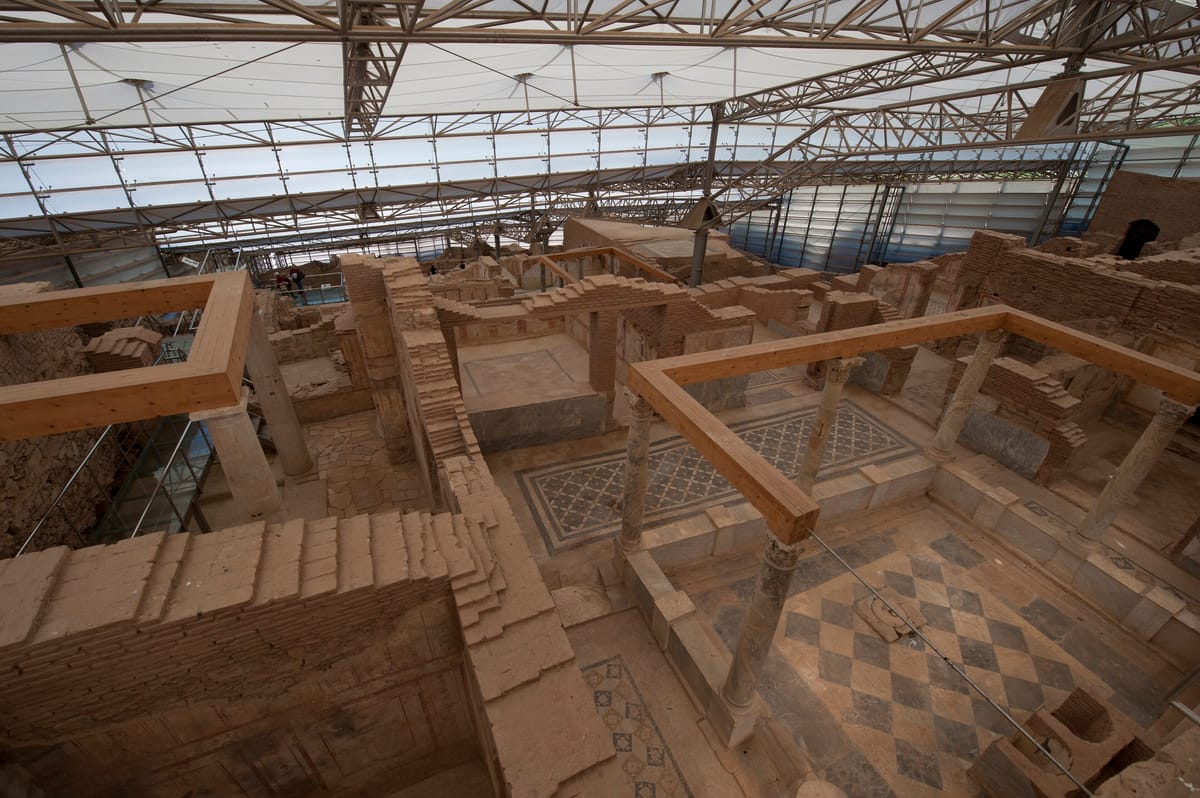
- The Terrace Houses. The excavated homes of the city's rich sit under a protective roof, the one big stretch of shade inside the site. They need their own ticket (€15, updated September 2026), and on a hot day the roof is a bonus on top of the frescoes and mosaics.
- The Library of Celsus, late in the day. The facade faces east, so from mid-afternoon its own shadow falls across the steps and the square in front.
- The gates. Buy water before you go in. There are no drinking fountains inside the site and only one small stand, near the Library of Celsus.
- The House of the Virgin Mary. It stands among pine trees on Mount Nightingale, about 7 km from Selcuk, and is the shadiest stop of a summer tour.
The best shade, though, is the clock. The site opens at 8 a.m. (updated September 2026), when the marble is still cool from the night and the cruise coaches have not yet arrived. Our Treasures of Ephesus tour is built around that hour: three hours for the Library of Celsus, the Great Theater and the Temple of Artemis, done before the worst of the heat, with skip-the-line entry at the gate (the ticket itself is paid separately, at the Ministry price). The Ephesus map shows the downhill route we take.
What to wear and bring
There is no formal dress code at the archaeological site — shorts and sun dresses are completely fine. The rules change only at the House of Virgin Mary, an active shrine where shoulders and knees should be covered; carry a light scarf and you are set. Non-negotiables for everyone: genuinely comfortable shoes with grip (two-thousand-year-old marble polishes to glass), a hat, sunscreen, and water — buy it before you enter, because very little is sold inside and Roman shade is unreliable. A small note from experience: the site is a downhill walk of two to three hours when entered from the upper gate, which is how we route almost every tour.
And the fifteenth of August deserves its own line: the Assumption of Mary service fills the shrine on the mountain with pilgrims from around the world. Beautiful to witness — but plan the timing with someone who knows the traffic patterns of that particular morning. That would be us.
Sources & further reading
- Turkish Ministry of Culture — Museums — official hours and ticketing
- UNESCO World Heritage Center: Ephesus — the official World Heritage listing
- GoTurkey — the official tourism portal of Turkey
Keep reading
See all Ephesus travel articlesIs Ephesus Safe? What American Cruise Passengers Should Know
Is Ephesus safe for Americans on a cruise stop? The US advisory in plain words, the real port-day risks, and a checklist from the guides who meet ships at Kusadasi.
How to Get to Ephesus
From Kusadasi port, Izmir, the airport, Istanbul or Selcuk on foot — every route to the ruins with real times and honest local advice.
