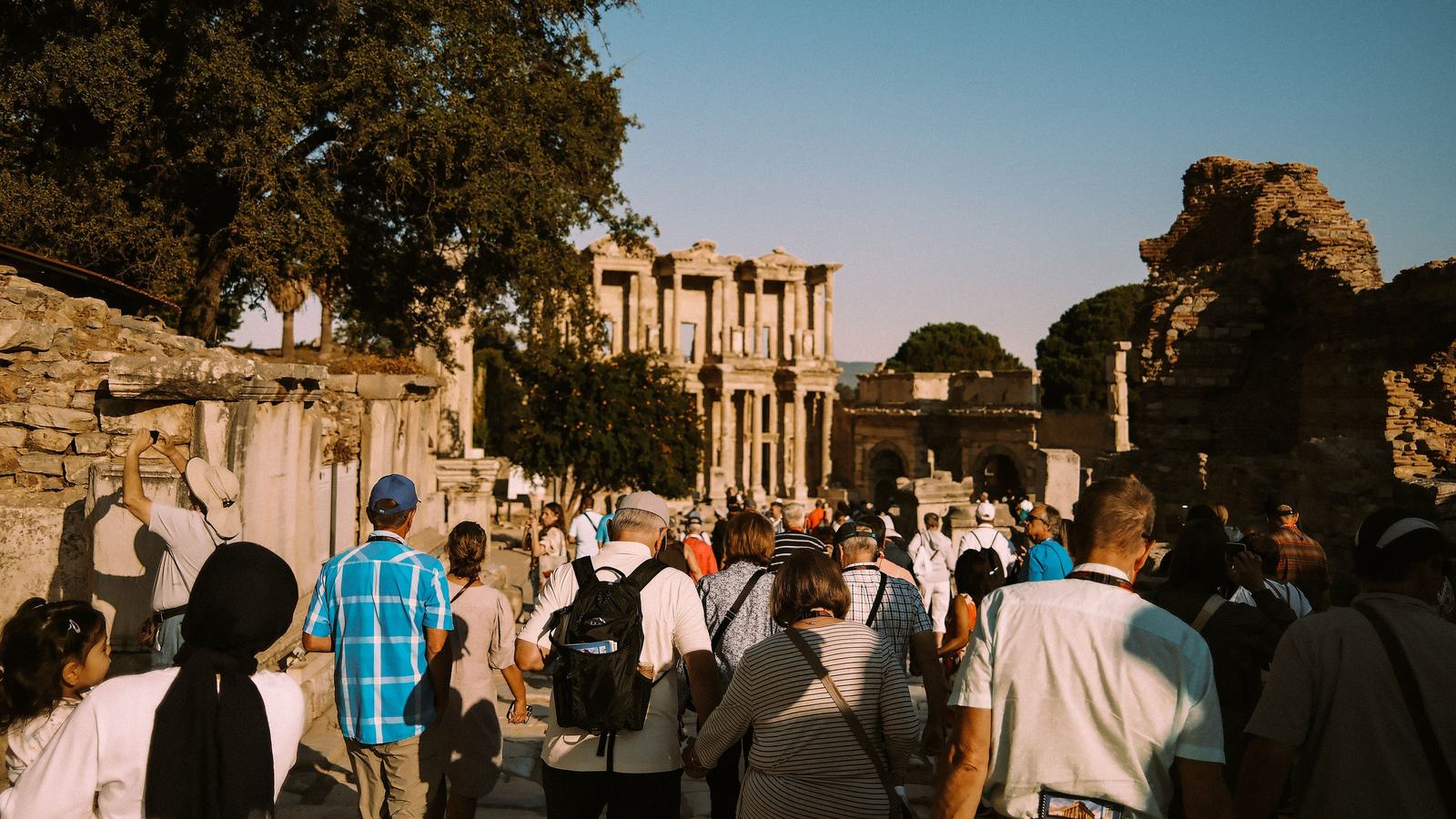
Is Ephesus safe? Yes, for Americans as for everyone else: Ephesus and the cruise port at Kusadasi are busy, well-run tourist places, and on a port day the real risks are heat, polished marble underfoot and the all-aboard clock. The US State Department rates Turkey Level 2, "exercise increased caution" (issued June 9, 2026), and its Do Not Travel zone is the strip along the Syrian and Iraqi borders, about 800 kilometers (500 miles) east of Ephesus in a straight line.
It is the question American guests ask us most in the weeks before a cruise, often after a relative has forwarded a headline. We would rather answer it with numbers than with reassurance. By the Ministry of Culture and Tourism's count, Ephesus was Turkey's most visited archaeological site in 2025, with 2,550,458 visitors. Ege Port Kusadasi, where the ships tie up, handled 995,303 cruise passengers on 617 calls that year, more than any other cruise port in the country. Places that busy run on routine. And for the geography-minded: Ephesus is closer to Athens, about 320 kilometers away, than to any part of the Syrian border.
Is Ephesus safe for American tourists?
For someone with seven or eight hours ashore, the more useful question is narrower: what actually goes wrong between the gangway and the Library of Celsus? In our experience it is three things, and all three have to do with the sun, your feet and the clock rather than with other people.
What the US travel advisory for Turkey says
The State Department's advisory for Turkey was issued on June 9, 2026 at Level 2, "exercise increased caution", citing terrorism, armed conflict and arbitrary detentions. Level 2 is the second of four steps, and it is where the Department also places France, Germany, Italy, Spain and the United Kingdom as we write. The one Level 4 area in Turkey is the band within 10 kilometers (6 miles) of the Syrian and Iraqi borders. Kusadasi, Selcuk and the rest of the Aegean coast carry no area warning of their own.
We will not pretend the advisory is empty. It asks visitors to stay alert in crowded places, tourist sites included, and to keep away from demonstrations, and it warns that unapproved protests and criticizing the government, including on social media, can lead to arrest. For a port day that comes down to habits most travelers already have: watch your surroundings at the busiest spots, walk away from any protest, leave political commentary off your social media while you are in the country, and do not film military operations or installations. Read the advisory again the week you sail; it changes, and the date on our quick answer above shows when we last checked it.
A three-ship day in Kusadasi and at Ephesus
Kusadasi's cruise port has two long piers that can berth up to four large ships at once, and the terminal sits about 50 meters from the town center. You step off the gangway, walk through the terminal and are on the seafront among cafes, shops and taxis. On a day with three ships alongside, the pier is lively from breakfast on: ship buses loading, guides holding name signs, crew heading into town for an hour off. It is busy in the way a cruise port is supposed to be busy.

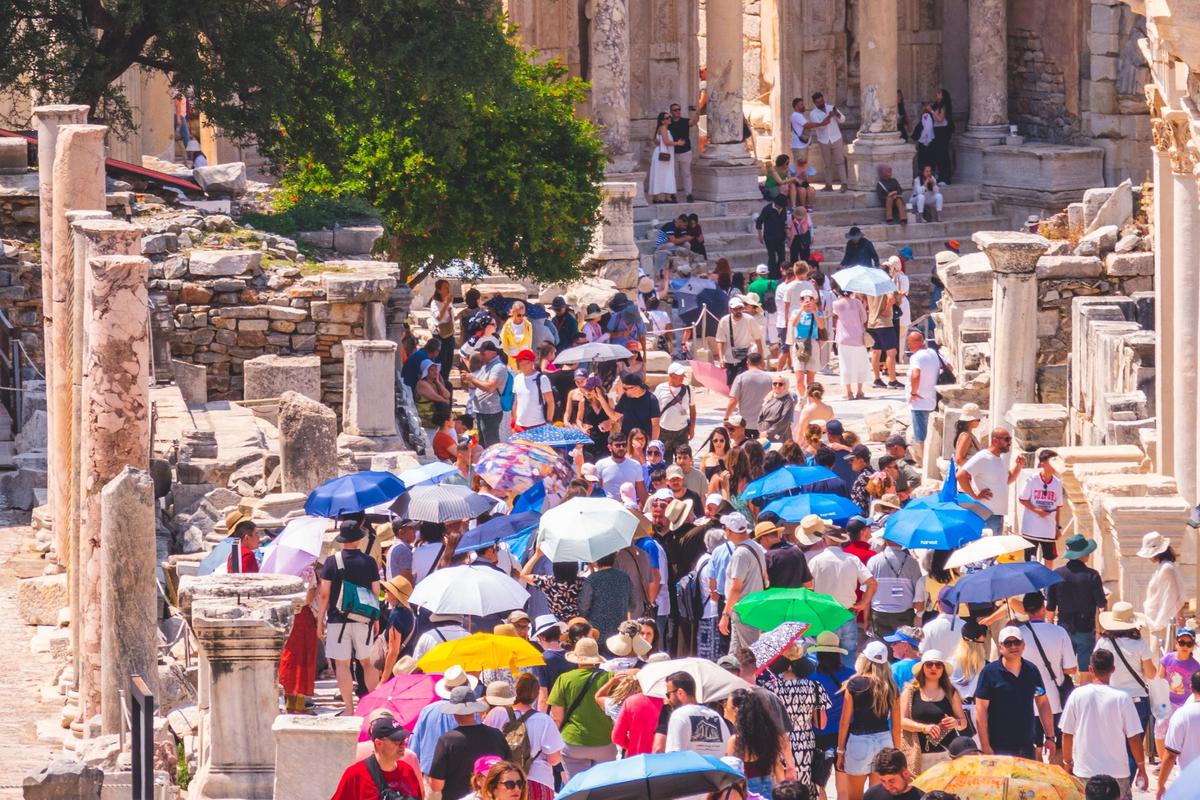
The drive to Ephesus is about 18 to 20 kilometers, 20 to 30 minutes, and can stretch to 45 minutes at the height of summer; our page on getting to Ephesus covers every option. At the site the crowd builds from about ten in the morning, when most ship buses arrive, until early afternoon. The busiest spot is the square in front of the library, where at midday you may stand shoulder to shoulder with people from a dozen countries, phones held high. It is good-natured, like a packed overlook in a national park at sunset, and it calls for the precaution you would take at any famous landmark. The State Department notes pickpocketing in tourist areas across Turkey, so keep your phone and wallet zipped into a front pocket or bag.
Is Ephesus safe to visit? The three real risks on a port day
Here is what we actually see go wrong, in order of how often.
1. The heat
In July and August the average high in Selcuk is about 35°C (95°F), it almost never rains, and the main streets of Ephesus, Curetes Street among them, have very little shade. The marble throws the sun back up at you, so it feels hotter than the number. Carry water, wear a hat and sunscreen, and do the walk in the morning if your port times allow it. The roofed Terrace Houses, on a separate ticket, are the best shade on the route. Our best time to visit Ephesus page goes month by month; April, May, September and October are the gentle ones.

2. Polished marble
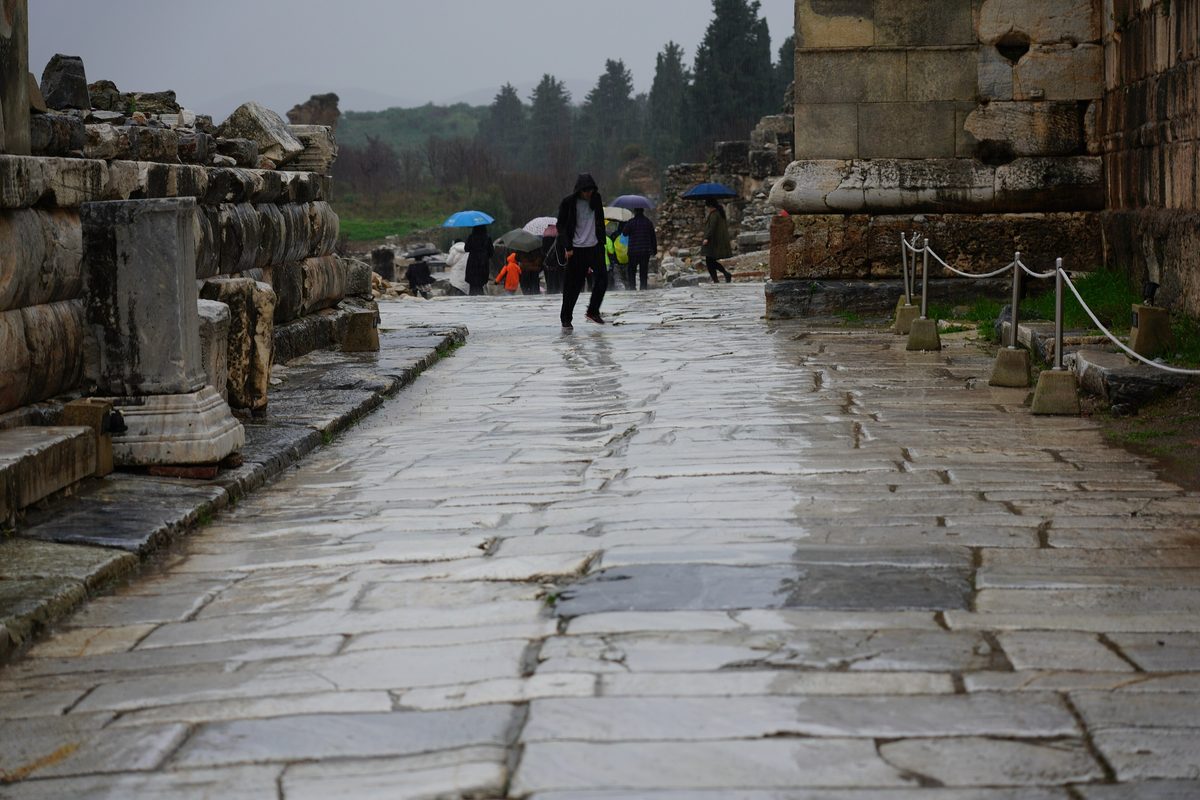
The route through the ancient city is about 1.5 kilometers (a mile), mostly downhill and mostly on marble that two thousand years of feet have polished smooth. It is slick when dry and slicker after rain, with worn steps and gaps between the slabs. Wear closed walking shoes or sport sandals with rubber soles that grip; flip-flops and smooth leather soles are the ones that slide. Our printable Ephesus map shows both gates and the slope between them. If you use a cane or have a knee that complains on stairs, tell us before the day: our Ephesus tour for seniors keeps the walk downhill-only, with shaded rests.
3. The all-aboard clock
This is the one that costs money. All-aboard is usually at least half an hour before the ship sails, and cruise lines wait for their own shore excursions when those run late, but not for guests who went ashore on their own. Miss it and you are catching up with the ship at the next port at your own expense. The variable people forget is traffic back into Kusadasi on a multi-ship afternoon. Plan the day backward from all-aboard, not forward from breakfast; our ship excursion vs private tour comparison sets out how each option handles it.
Practical safety for Americans ashore
- Passport and visa: US citizens need no visa for tourist stays of 90 days or less, according to the State Department, which also asks for six months of passport validity beyond your entry date. Take ashore whatever ID your cruise line tells you to carry.
- Money: credit and debit cards are widely accepted. At the Ephesus ticket office you pay in Turkish lira or by card; euro banknotes are not accepted there, and our Ephesus entrance fees page has the current prices. A little lira cash is handy for water.
- Medicines: the State Department warns that some common US prescription and over-the-counter medicines are illegal in Turkey, among them opioid painkillers, benzodiazepines, ADHD stimulants and cold remedies such as Sudafed or anything with codeine. If you need one during the day, carry the prescription and a letter from your doctor; if you do not, leave it on board.
- Emergencies: 112 is the number for police and ambulance. Your ship has its own medical center; ashore you may choose the clinic, public or private, and the State Department suggests getting the costs and checking your insurance before agreeing to treatment.
- Before you fly: enroll in the State Department's free STEP program so the embassy can reach you, and save your guide's contact and the ship's port agent number in your phone.
Is Kusadasi safe for Americans?
Yes. Kusadasi is a seaside resort town that sees cruise passengers almost every day of the season, and the US advisory gives it no warning of its own. The old streets and the seafront are a few minutes' walk from the terminal, and the same common sense applies as at Ephesus: valuables zipped, an eye on your group in a crowd, and your all-aboard time on your phone's lock screen. With a spare hour at the end of the day, the causeway out to Pigeon Island and its Ottoman-era fortress is a flat, easy walk; our Kusadasi page lists what else is close to the pier.
From the ship to the site and back, without the worry
The part of a port day that genuinely needs planning is the transport and the timing, so that is what our Kusadasi shore excursion is built around. Your guide follows the ship's real arrival rather than the printed schedule and waits at the terminal exit with a name sign. A private air-conditioned vehicle takes you to the upper gate, and you walk the marble downhill, with water and shade stops where you need them. We buy your skip-the-line tickets in advance at the Ministry's gate price with nothing added; the ticket cost itself is paid separately. Then we plan the whole day backward from your all-aboard time. No guest of ours has ever missed a sailing, and we plan every call to keep it that way.
What fits a short, medium or long call is in our Ephesus cruise port guide, and everything else for the day is on our plan your visit page.
We reply to every inquiry within 24 hours, any day, and there is no prepayment.
Sources & further reading
- US Department of State: Türkiye travel advisory — Level 2, issued June 9, 2026; entry rules, medicines and emergency numbers
- Global Ports Holding: Ege Port Kusadasi — two piers for up to four large ships, about 50 meters from the town center
- Turkish Ministry of Culture and Tourism: Efes Örenyeri — official opening hours and tickets for the Ephesus archaeological site
- UNESCO World Heritage Center: Ephesus — the official World Heritage listing
- Strabo, Geography 14.1.23 (LacusCurtius, University of Chicago) — the Temple of Artemis as a place of refuge, and how Augustus cut it back