
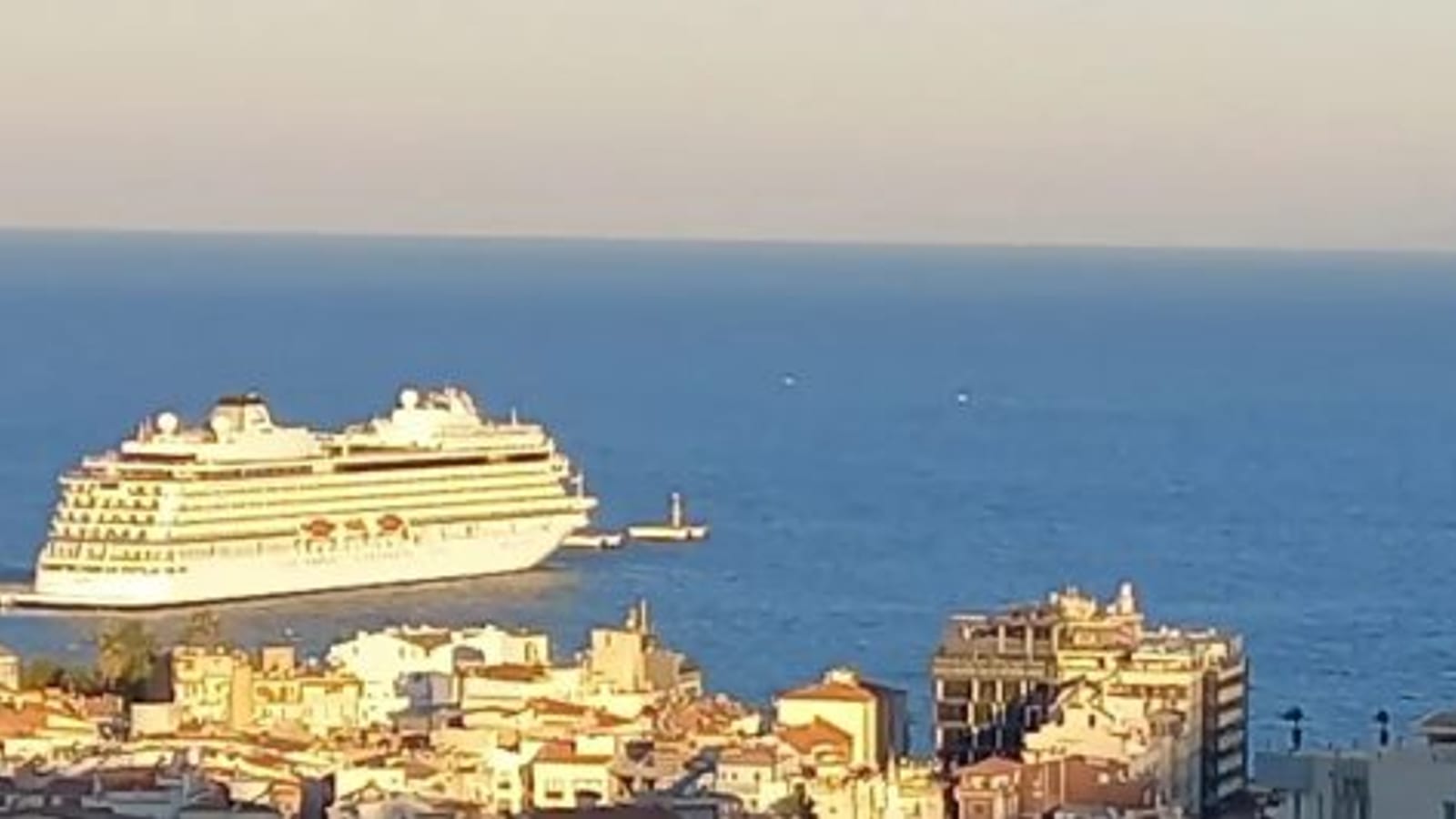
Every week a version of the same email lands in our inbox: "We dock in Kusadasi on the 14th, five hours in port — is that enough for Ephesus, and how do we actually get there?" It is one of the most searched questions about this coast, and most of the answers online come from cruise-line marketing pages or forum posts written by someone who did it once, in 2019. Here is the version we would give a friend.
First, a small correction: there is no "Ephesus cruise port"
This trips people up constantly, so let us clear it early. Ships do not dock at Ephesus. They dock at Kusadasi, a working port town about 18 kilometers south, and Ephesus is the inland archaeological site everyone is actually going to see. Search engines have started calling Kusadasi "the Ephesus cruise port" because that is what people type, but the two places are not the same, and knowing that saves you from wandering Kusadasi's old town looking for a Roman library that is not there.
There is a pleasing bit of history buried in that confusion. Ephesus genuinely was a port city once — ships tied up at the base of what is now Marble Street, and the Great Theatre stood at the head of a working harbour. Centuries of river silt pushed the coastline back until the sea disappeared from view entirely, which is the whole story behind why your ship now stops at Kusadasi instead. If that kind of thing interests you, our article on the decline of Ephesus and its silting harbour goes into it properly.
Is Kusadasi a tender port?
Usually not. Kusadasi has a proper cruise pier with an alongside berth, so on most calls your ship ties up directly and you walk off the gangway onto the terminal, no tender boat involved. The exception is a busy day with several large ships in port at once — occasionally the smaller or later-arriving vessel anchors offshore and tenders passengers in. Your cruise director will tell you which applies to your call the night before; it is worth listening properly, because a tender adds a real chunk of time to your morning that a private guide needs to plan around.
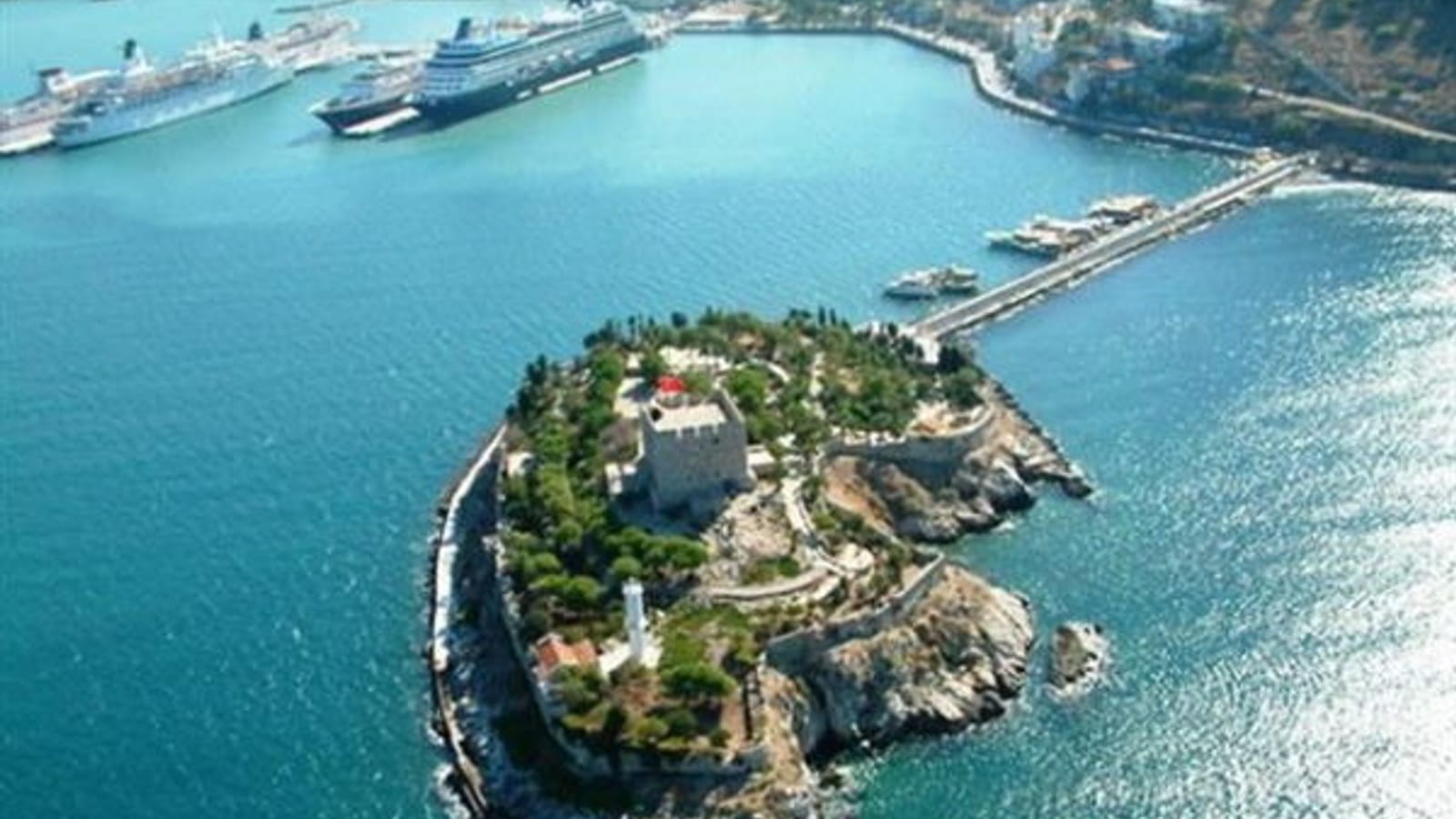
How far is Ephesus from the cruise port, really
About 18 kilometers, which is a 20 to 25 minute drive in normal traffic — a little longer if a cruise convoy of buses is crawling the same road at the same hour, which, on a big port day, it usually is. You cannot walk it; people occasionally ask, and the honest answer is that 18 kilometers of coastal highway is not a walk anyone should attempt with a ship to catch. Your practical options at the terminal are the ship's own shore excursion buses, a metered taxi, the local dolmus minibus if you enjoy a bit of an adventure and speak a little patience, or a private guide who is waiting for you specifically. We cover the general routes from Kusadasi, Izmir and Selcuk in more detail in how to get to Ephesus; this article is about the cruise-specific version of that question.
The one factor that changes everything is who controls your timing. Ship excursions run on the ship's clock and move in large groups, which means you arrive at the Library of Celsus at exactly the same moment as four other coach-loads. A private guide can leave the instant you are off the gangway and choose the entrance gate specifically to beat that crowd — which brings us to the part of the day that actually determines whether you enjoy yourself.
How many hours you actually need
We get asked this more than anything else, and the honest answer depends on your ship's window, not on how much you love Roman history.
- Three hours ashore: tight, but workable with an early start. You will see the essential circuit — Curetes Street, the Library of Celsus, the Great Theatre — at a brisk pace, and nothing else. No Terrace Houses, no Virgin Mary's House.
- Four to five hours ashore: comfortable. The full Ephesus walk without rushing, plus one meaningful extra — the Terrace Houses or the House of Virgin Mary in the pine hills above Selcuk.
- Six hours or more: generous. Ephesus properly, an extra site or two, and time for lunch and a local artisan visit — whatever is local and fresh, cooked by local chefs — before heading back.
Whatever your window, build in a real buffer before your ship's "all aboard" time — not the boarding time, the actual departure. Traffic on the coastal road on a multi-ship day is the one variable nobody fully controls, guide included.
The gate matters more than the guide, almost
Ephesus has two entrances, upper and lower, and on a cruise day the choice is not cosmetic. Enter at the upper (Magnesia) gate and the whole site runs downhill, which is kinder on a hot morning and, more importantly, lets you reach the Library of Celsus from the opposite direction to most of the coach traffic pouring in from the lower gate. We have watched entire ship excursions bottleneck at the lower entrance while a small group walked calmly down from the top and had the library square nearly to themselves for ten minutes. Our full breakdown of daily crowd patterns is in best time to visit Ephesus, and current ticket prices are on our 2026 entrance fees page, with a site map if you want to see the layout before you go.
Money, cards and the practical small stuff
Cards are accepted almost everywhere on this route now, including most vendors near the port and the ticket counters at Ephesus itself, so you genuinely do not need to change currency for a single port day. Most nationalities on cruise calls do not need a separate visa for a shore excursion of this kind, but the rules vary by passport, so confirm your own situation before you sail rather than at the gangway. None of this is a reason to worry — it is the kind of thing a guide simply handles, which is rather the point of hiring one for a day with a hard deadline attached.
So: ship excursion, taxi, or private guide?
We are not going to pretend to be neutral — we run private shore excursions for a living, and our Kusadasi to Ephesus shore excursion exists precisely for this problem. But we will be honest about when each option actually makes sense.
A taxi works if you are confident, know roughly what you want to see, and are comfortable negotiating a return fare and a waiting time before you get in the car. A ship excursion works if you would rather not think about logistics at all and do not mind moving at the pace of the slowest person in a forty-seat coach. A private guide earns their cost specifically on a cruise day, because the entire value is timing: someone watching your ship's real position rather than the printed schedule, choosing the gate that avoids the crowd, and building in a margin that means you are never the couple sprinting down the pier as the horn sounds. That last part is not a sales line — in all our years running port days, no guest of ours has watched their ship leave without them, and we intend to keep it that way.
If you are weighing a guide against going it alone entirely, our earlier piece on whether you can visit Ephesus without a tour lays out that decision honestly too — cruise passengers are, in our experience, the group for whom a guide makes the clearest difference, purely because the clock is not negotiable.
Whatever you choose: know your ship's actual boarding deadline, pick the upper gate if you go independently, and do not let anyone tell you Ephesus is a rushed half-day. It has survived two thousand years of far worse timing problems than yours. If you would like us to plan your specific port window, write to us with your ship and date — we answer honestly, including when the answer is "three hours is genuinely enough, don't overpay for more."
Sources & further reading
- UNESCO World Heritage Centre: Ephesus — the official World Heritage listing and site boundaries
- Turkish Ministry of Culture and Tourism — Museums — official opening hours and ticketing
- Austrian Academy of Sciences — the institute excavating Ephesus since 1895
- Encyclopaedia Britannica: Ephesus — background on the city's history and ancient harbour