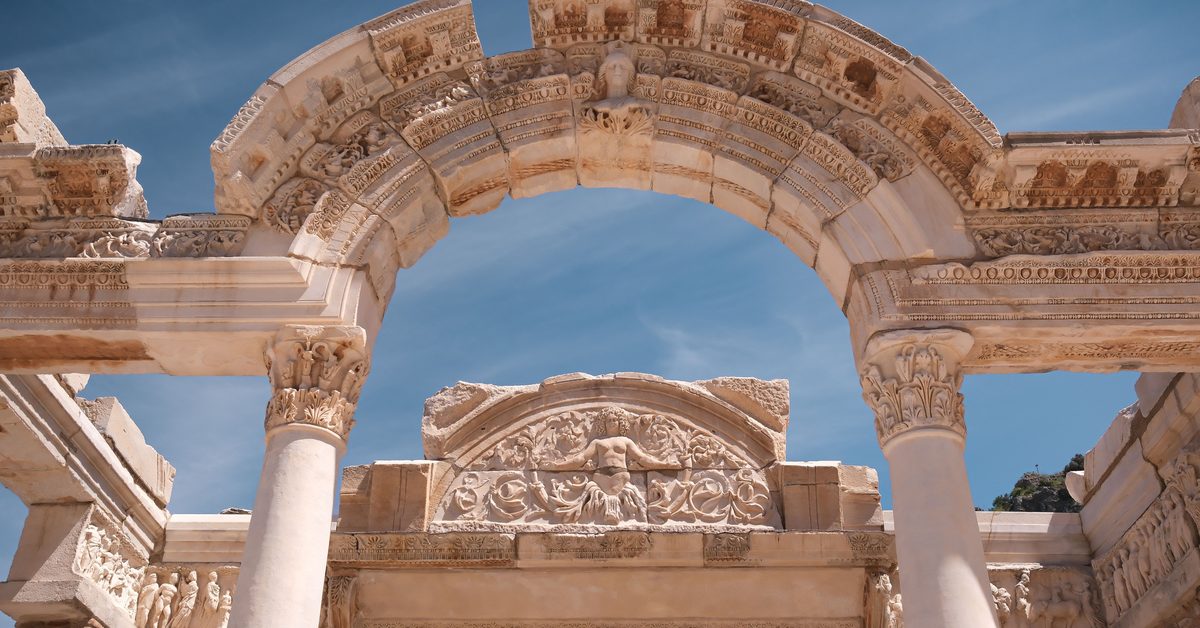
Halfway down Curetes Street stands a small temple that photographs better than buildings fifty times its size. Guides argue about many things; on the Temple of Hadrian's status as the most elegant monument in Ephesus, we are unanimous.
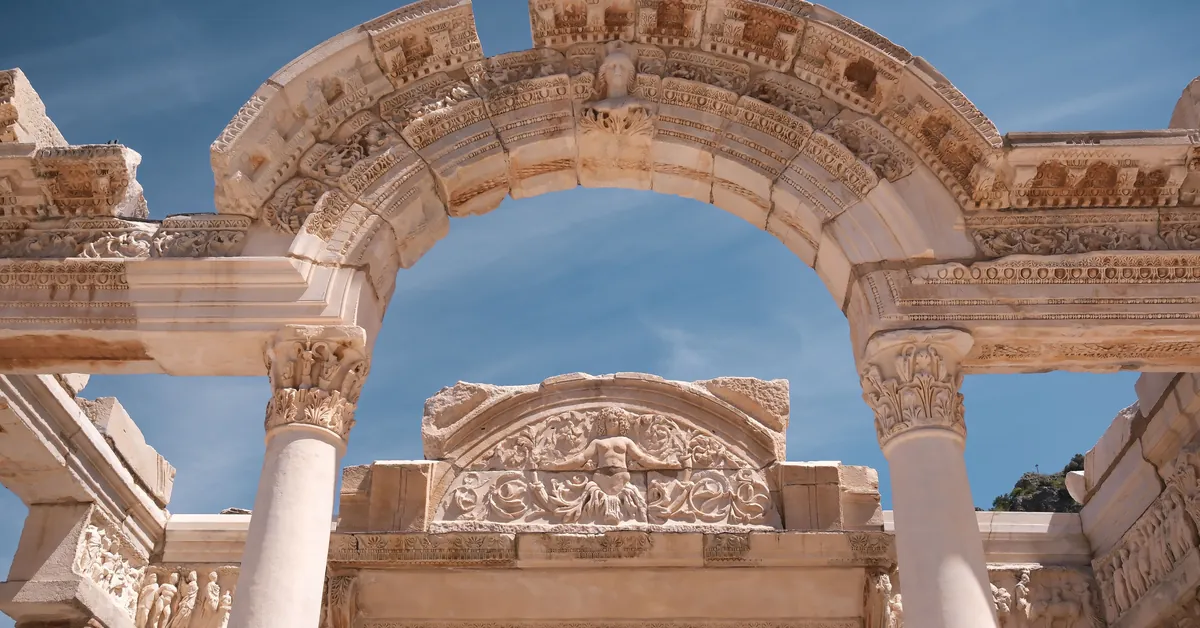
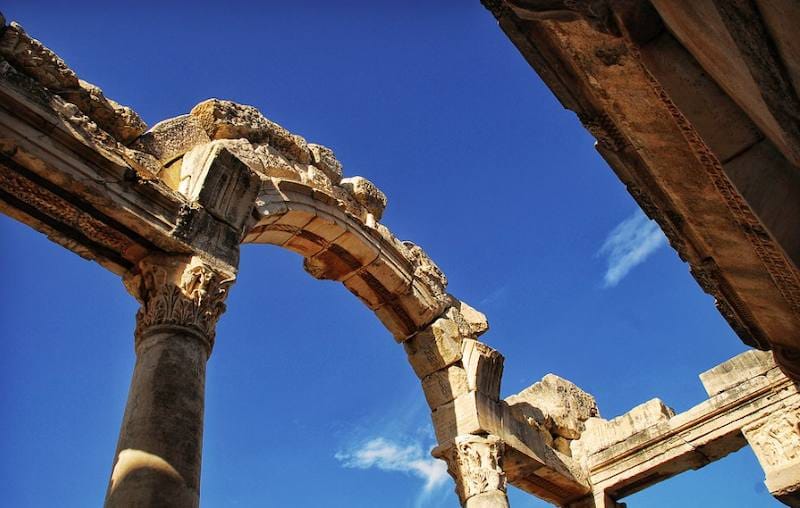
It was dedicated around AD 127–128 to the emperor Hadrian, the restless traveler who visited Ephesus in person. What stops visitors is the entrance: four Corinthian columns carry a triangular pediment broken by a graceful arch — a so-called Syrian arch — and on the keystone of that arch balances Tyche, goddess of fortune, holding the fate of the city on the thinnest point of the whole structure. The Romans did have a sense of humor about risk.
Step closer and meet the second lady of the house: above the inner doorway, a half-figure of Medusa spreads amid carved acanthus leaves. She is not decoration — her petrifying stare was posted there to keep evil out of the sacred room. Consider her the most beautiful security system ever installed.
The city's birth certificate, in marble
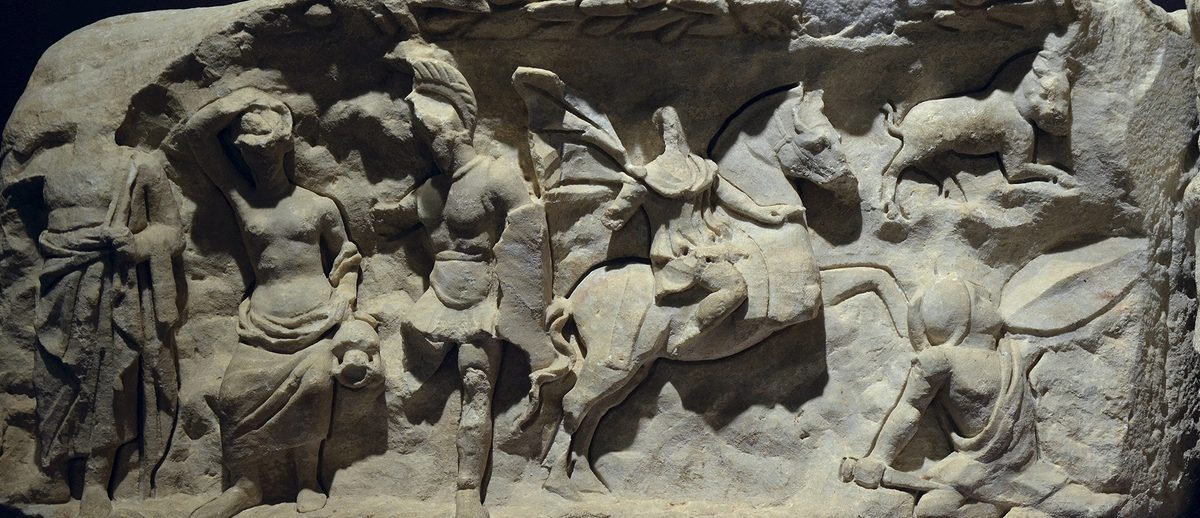
Around the interior runs a frieze that amounts to Ephesus's origin story. It shows Androklos, the Athenian prince, hunting the wild boar — the oracle at Delphi had promised that "a fish and a boar" would mark the site of his new city, and the legend says a leaping fish knocked embers into a thicket, flushing out a boar that Androklos chased and killed on this very ground. City founded, prophecy fulfilled, frieze commissioned. The panels you see in place are precise copies; the originals are guarded a few kilometers away in the Ephesus Museum in Selcuk, and seeing both is one of the small pleasures of a well-planned day.
In front of the temple stand four statue bases whose inscriptions name the four rulers of Rome's Tetrarchy — evidence the little building stayed politically important for two full centuries. The statues themselves are long gone; the flattery, carved in stone, survives.
Sources & further reading
- UNESCO World Heritage Center: Ephesus — the official World Heritage listing
- Austrian Academy of Sciences — restoration of the Temple of Hadrian
- Turkish Ministry of Culture — Museums — the original friezes in the Ephesus Museum
See Temple of Hadrian on these tours
Keep reading
See all attractions around EphesusTerrace Houses in Ephesus
Seven Roman villas under one protective roof, their frescoes and mosaics astonishingly intact. The sight most visitors wrongly skip.
Odeon of Ephesus
The intimate marble hall where the city council governed by day and musicians played by night — your first monument inside the upper gate.