

Between Ayasuluk Hill and the lone column of the Temple of Artemis stands a building that has done the same job for six and a half centuries. Isa Bey Mosque, completed in 1375 and named for the Aydinid ruler who commissioned it, is among the oldest and finest works of Seljuk-style architecture on the Aegean coast.
Its architect, Ali son of Mushaimish of Damascus, faced the mosque not toward the street but toward beauty: an asymmetrical western facade of banded marble, stalactite-carved portal and calligraphic panels, much of its stone lovingly recycled from the ruins of Ephesus and the Artemis temple below — columns from a pagan wonder now holding up a courtyard of prayer.
Visiting
This is a living mosque, not a museum. It welcomes visitors of every faith at any time except Friday midday, when the Muslim community of the Ephesus area gathers for the week's main prayers. Women are asked to cover their hair (scarves are available), everyone removes shoes at the prayer hall, and modest dress is appreciated — the same courtesy asked at the House of Virgin Mary up the hill.
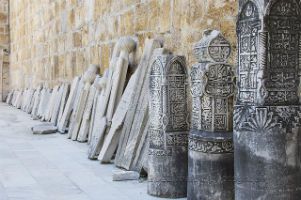
The courtyard is the quiet masterpiece: palm trees, ancient columns, carved gravestones and storks overhead. Guides love this stop because it completes Selcuk's astonishing 100-meter timeline — pagan wonder, Byzantine basilica, Seljuk mosque — three worlds within one short walk.