
Along the old road to the Temple of Artemis, in 1993, excavators uncovered a cluster of graves with carved tombstones showing helmeted fighters, tridents and victory wreaths. It turned out to be the only gladiator cemetery ever scientifically excavated anywhere in the Roman world — and the sixty-eight skeletons inside have been quietly rewriting the history of the arena ever since.
What the bones said
Forensic scientists from the Medical University of Vienna spent years reading the remains the way detectives read a crime scene, and their findings run delightfully against the movie script. Start with dinner: chemical analysis of the bones showed the fighters lived overwhelmingly on barley and beans — Romans actually nicknamed gladiators hordearii, "barley men." The carbohydrate-heavy diet built a padding of fat that protected muscles and nerves from shallow cuts; a bleeding, dramatic surface wound kept the crowd happy while keeping the asset alive. They even drank a tonic of vinegar and plant ash — a crude but genuinely effective calcium supplement, the ancient world's sports drink.
The wounds tell the second story. Many skeletons show serious injuries that healed cleanly — properly set fractures, trepanned skulls, survived blade wounds — proving these men received expensive, expert medical care. It makes brutal economic sense: a trained gladiator represented years of investment, and this coast employed the empire's best doctors (Galen himself, greatest physician of antiquity, began his career patching gladiators at nearby Pergamon). The arena was savage; it was not careless.
The trident and the hammer
And then the exhibits that stop every visitor: one skull pierced by three neat, evenly spaced holes — the exact geometry of a retiarius's trident, the net-fighter's signature weapon. Others bear squared punctures matching no combat weapon at all, but consistent with a heavy ceremonial hammer: the mercy blow delivered to the mortally wounded, by an official dressed — the sources tell us — as the god of the underworld. Roman spectacle stayed in character right to the end.
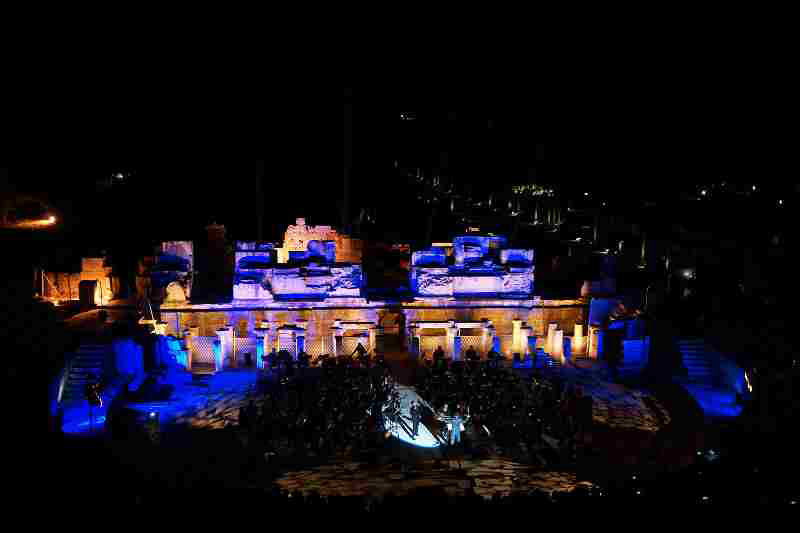
The fights themselves happened in two venues you can still stand in: the Great Theater, whose orchestra was walled in the later empire to protect front rows from what happened inside, and the vast stadium near the lower gate, whose arena end hosted the marquee bloodsport. The best tombstones and a reconstruction of the research are displayed in the Ephesus Museum in Selcuk — including grave reliefs commissioned by the fighters' wives and fan clubs. Gladiators died young, but not unloved.
We tell this story to teenagers who arrived sulking about a "boring ruins day" and watch them commandeer the rest of the tour with questions. If that describes anyone in your party, our Ephesus for Teens tour leans all the way in.
Sources & further reading
- Medical University of Vienna — the forensic study of the gladiator remains
- Austrian Academy of Sciences — the Ephesus excavations
- Encyclopaedia Britannica: Gladiator — the institution of the arena
Keep reading
See all Ephesus travel articlesAlexander the Great, Lysimachus and the City That Moved
Alexander offered to rebuild the burned wonder; the Ephesians talked their way out. Then his general moved the whole city — with plumbing as the weapon.
The Decline of Ephesus: Why the City Was Abandoned
Why Ephesus was abandoned, when it fell and what happened to the city: silt, earthquakes, Goths, Arabs and a slow move uphill, with dates.