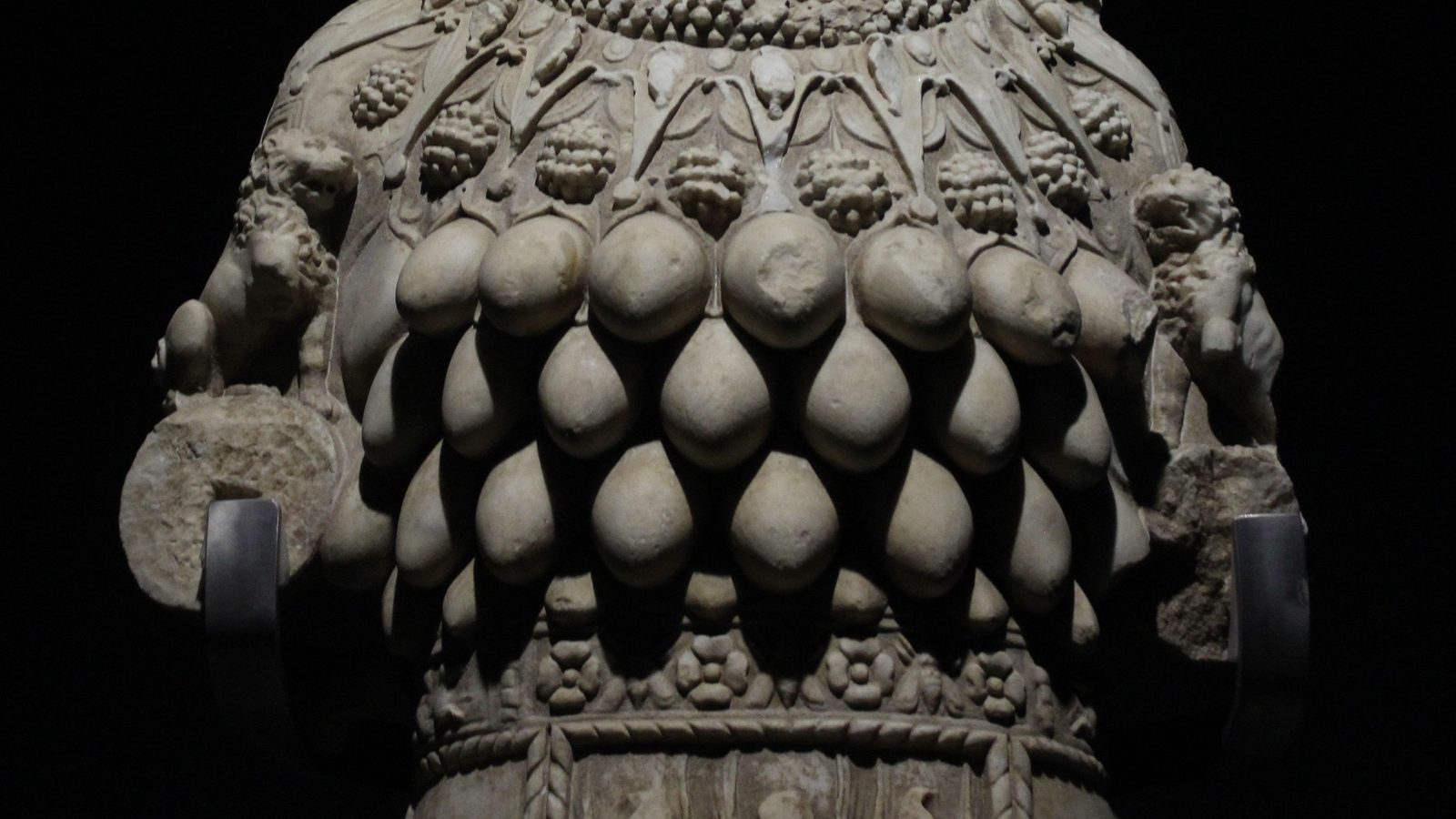
The many-breasted Artemis of Ephesus is probably not many-breasted at all. The rows of ovals on her chest have no nipples, and since 1973 scholars have argued that they are eggs, the testicles of sacrificed bulls or hung amber jewelry, with no agreement yet. The best place to judge for yourself is the Ephesus Museum in Selcuk, home of the 2.92 m Great Artemis and the 1.74 m Beautiful Artemis.
We stand in front of this statue with our guests most weeks of the season, and the question usually comes before anyone has read the label: are those breasts? Our honest answer is that the confident "yes" you hear is the weakest of the four explanations. Here is what each one rests on, where it falls short, and what to look for when you are standing in front of her. Opening hours, the rest of the collection and how the museum fits into a day out are on our Ephesus Museum page; this one is about what the goddess is wearing.
Is the Artemis of Ephesus statue covered in breasts?
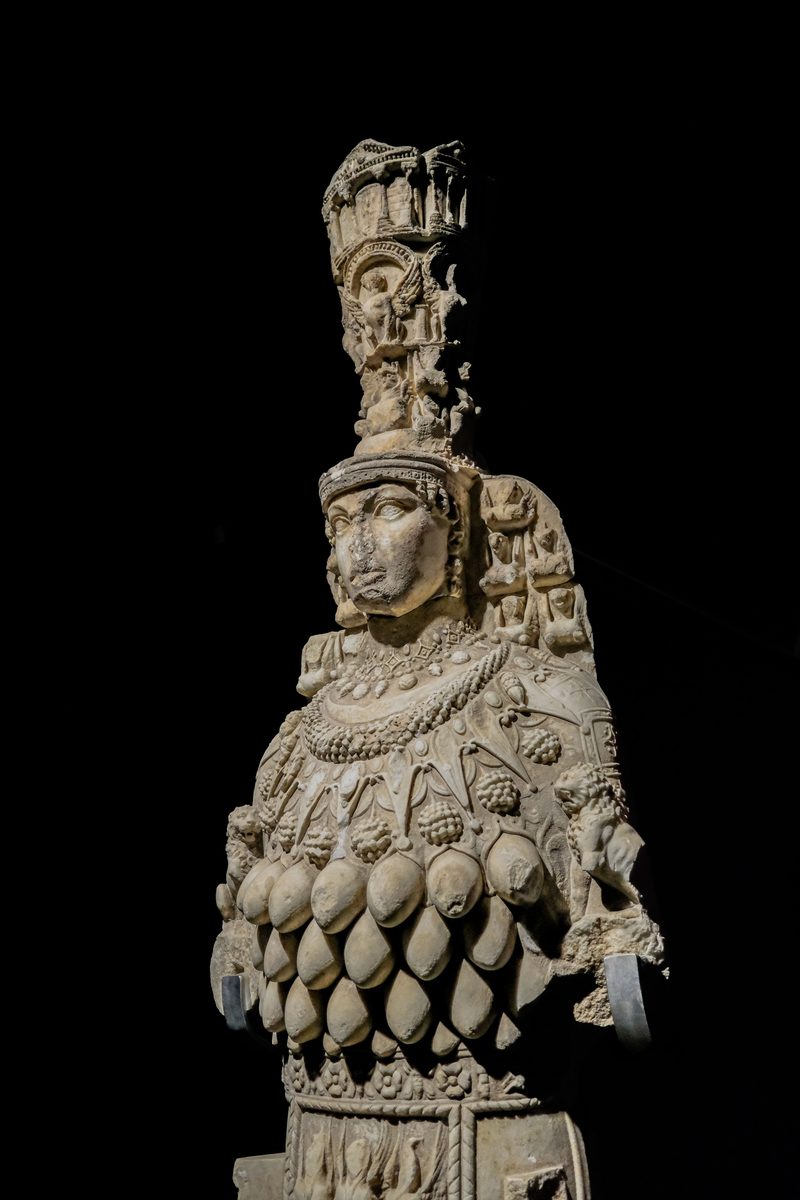
Probably not. The ovals on the Artemis of Ephesus statues have no nipples, sit on top of her clothing and vary in number between copies. "Many-breasted" is a label from Christian writers of late antiquity; many modern scholars read them as attachments: eggs, bull testicles or amber jewelry.

Many-breasted Artemis of Ephesus: where the name comes from
The goddess the Ephesians worshipped was Artemis, but not the slim huntress with a bow from Greek vases. Artemis of Ephesus was an older, stranger figure: stiff as a pillar, crowned with a tall headdress, her lower body wrapped in a tight sheath of panels filled with animals. Her temple outside the city was one of the Seven Wonders of the Ancient World, and her name filled the Great Theater in Acts 19, when the silversmiths of Ephesus shouted "Great is Artemis of the Ephesians" for two hours. Our page on Paul in Ephesus tells that story.
The people who prayed to her left no description of her as many-breasted. The label comes from Christian writers of late antiquity, Minucius Felix and Jerome among them, who were attacking the old religion rather than explaining it, and the later Latin tag "Diana Efesia Multimammia" grew out of their reading. Artists and guidebooks took it from there, and it has stuck for well over a thousand years.
The four explanations, and where each falls short
Four readings have serious scholars behind them. Here they are in the order you are most likely to hear them, with our verdict on each.
1. Breasts
The oldest reading, and the one on most signs. It fits the picture of a mother goddess of fertility, and from across the room the shapes do suggest it. Up close it struggles. There are no nipples on any of the ovals. They sit on top of her dress, not on the body underneath. Their number changes from one statue to the next, which is odd for anatomy and normal for jewelry. And the archaeologist Robert Fleischer, whose 1973 study of the statue type is still the standard work, rejected the breast reading, pointing out that ancient art treated a sagging female breast as grotesque and hardly ever carved one. Verdict: the weakest of the four.
2. Bull testicles
The one every tour group remembers. In 1979 the scholar Gerard Seiterle argued that the ovals were the scrota of bulls sacrificed to the goddess and hung on her wooden image as offerings; he had presented the idea in London the year before, reportedly with a model hung with the real thing. The historian of Greek religion Walter Burkert accepted it in the 1980s, and that is why it turns up on every second blog. Fleischer rejected it, and no ancient writer describes such a rite. Verdict: memorable, and not proven.
3. Eggs
Eggs, and the fruits sometimes proposed beside them, such as gourds and dates, keep the fertility meaning without the anatomy. Fleischer himself suggested that the ovals were objects hung on the original image, possibly eggs. Like the testicle theory, though, it rests on what the shapes might symbolize rather than on anything dug up at Ephesus. Verdict: plausible, unproven.
4. Amber drops: jewelry on the old wooden image
This is the only reading with something you can hold in your hand. In 1987 and 1988 the Austrian excavators at the Temple of Artemis, under Anton Bammer, recovered drops of amber from the earliest levels of the sanctuary: gourd-shaped, oval in cross-section and drilled to hang on a string. The argument runs like this. The first cult image was wooden and dressed in real jewelry. Centuries later, sculptors copying that image in marble carved the hanging drops into the stone, long after anyone remembered what they had been. Verdict: our favorite, because it starts from an object rather than a theory. It is still a theory.
The honest answer is that nobody knows, and that is a better story than the legend.
So that is what we tell our guests. The ovals were very likely not meant as breasts; they may well descend from real jewelry; and the goddess's own worshippers left no explanation behind. When anyone tells you flatly what they are, enjoy the story and keep the question open.
Where the statues were found
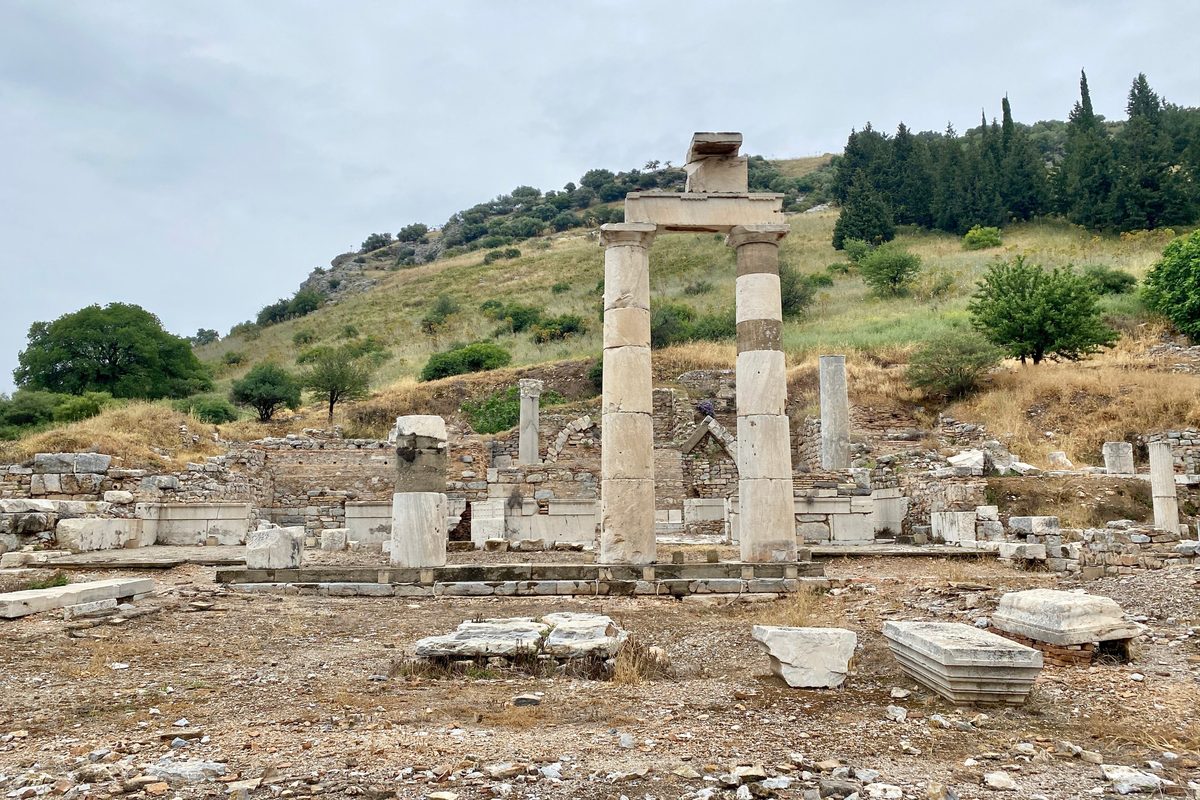
Neither famous statue came out of the temple. In 1956 the Austrian team under Franz Miltner found them buried in the Prytaneion, the town hall on the State Agora in the ancient city, where the sacred flame of Ephesus was kept. Both are Roman marble images, carved around 1,900 years ago as versions of a much older wooden cult statue. Today they stand together in the museum in the center of Selcuk.
What to look for at the Ephesus Museum in Selcuk
- No nipples. Stand close to the Great Artemis and look at the ovals from below and from the side. They are smooth, and they sit over the dress.
- Compare the two statues. Copies of this goddess do not all carry the same number of ovals, which is easier to explain for jewelry than for anatomy.
- The animals. Lions sit on her arms, winged creatures crowd her shoulders and crown, and the panels of her skirt are full of animals. Look for the bees on her belt and skirt.
- The crown. On the Great Artemis it rises in tiers carved with tiny columns and arches, like a small city on her head.
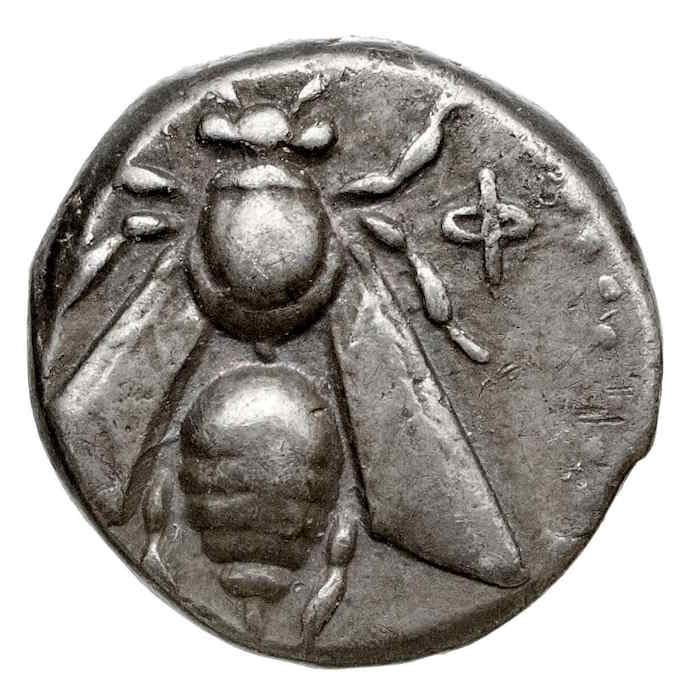
The bee was the emblem of Ephesus, stamped on the city's coins for centuries, so finding it on the goddess is a little like finding a city crest on a uniform. What exactly it meant to the Ephesians is debated too, but it is the one detail on her that we can say for certain belongs to the city.
Where is the original?
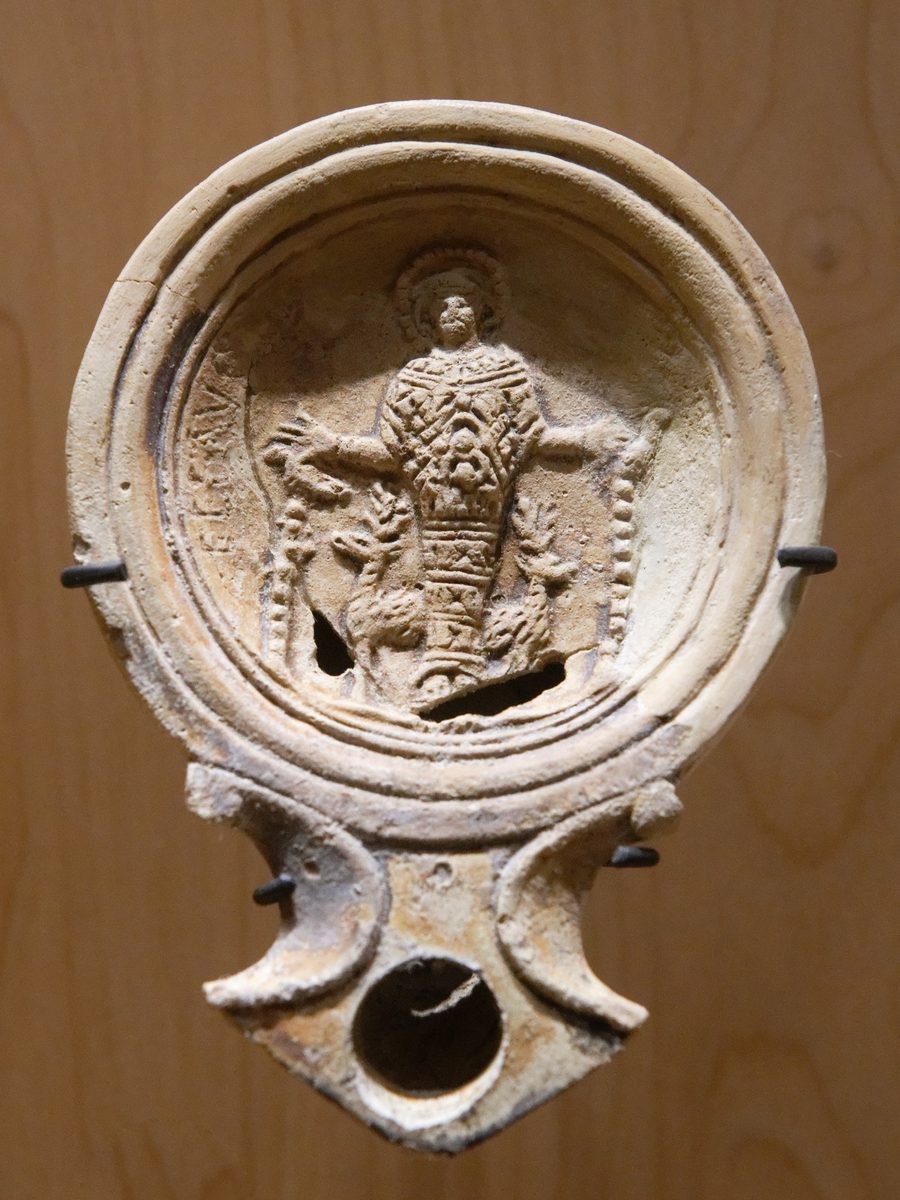
The marble statues are versions of a cult image that ancient writers describe as wooden, and that original has not survived. The temple it stood in is now one re-erected column in a marshy field on the edge of Selcuk; our Temple of Artemis page explains what happened to it. Roman copies of the goddess also traveled: the best known abroad is the alabaster Farnese Artemis in the National Archaeological Museum in Naples, whose dark bronze head and hands are later restorations. Closer to home, a full-size replica of the Selcuk statue stands in the Ephesus Experience Museum.
Seeing both statues with a local guide
Both statues are in the Selcuk museum, and our Selcuk old town tour walks it room by room with a licensed guide before going on to the Temple of Artemis, so you meet the goddess first and her temple second. The tour also takes in the Basilica of Saint John and the Isa Bey Mosque. It is all-inclusive: the museum ticket and every other entrance on the route are part of the price, and half the day is indoors, which is why our guests choose it in July and August.
If you would rather see the statues and the marble streets of Ephesus on the same day, our create-your-own tour puts the museum and the ruins together, and the Ephesus one day itinerary shows where the museum fits after the walk. The museum has its own ticket, separate from the ruins; current prices are on our Ephesus entrance fees page.
Sources & further reading
- Harvard Theological Review: LiDonnici, The Images of Artemis Ephesia (1992) — the scholarly review of the breast, bull and other readings
- Ministry of Culture and Tourism: Ephesus Museum — the official page of the museum in Selcuk
- Austrian Archaeological Institute: Ephesus excavations — the team that found the statues in 1956 and the amber drops in 1987-88
- Encyclopaedia Britannica: Ephesus — the city, its goddess and the Temple of Artemis
- UNESCO World Heritage Centre: Ephesus — the listing, which includes the Artemision
Keep reading
See more on the Ephesus Travel BlogEphesus One Day Itinerary: The Stops in Walking Order
What to see in Ephesus in one day: the stops from the upper gate down to the lower gate, ranked by what first-time visitors remember, with the minutes to allow and the one stop that needs its own ticket.
Ephesus Upper Gate vs Lower Gate: Which One on a Cruise Day?
Upper gate or lower gate at Ephesus? For most cruise passengers the answer is the top, with the car waiting at the bottom. Here is why, and the four situations where starting low makes more sense.