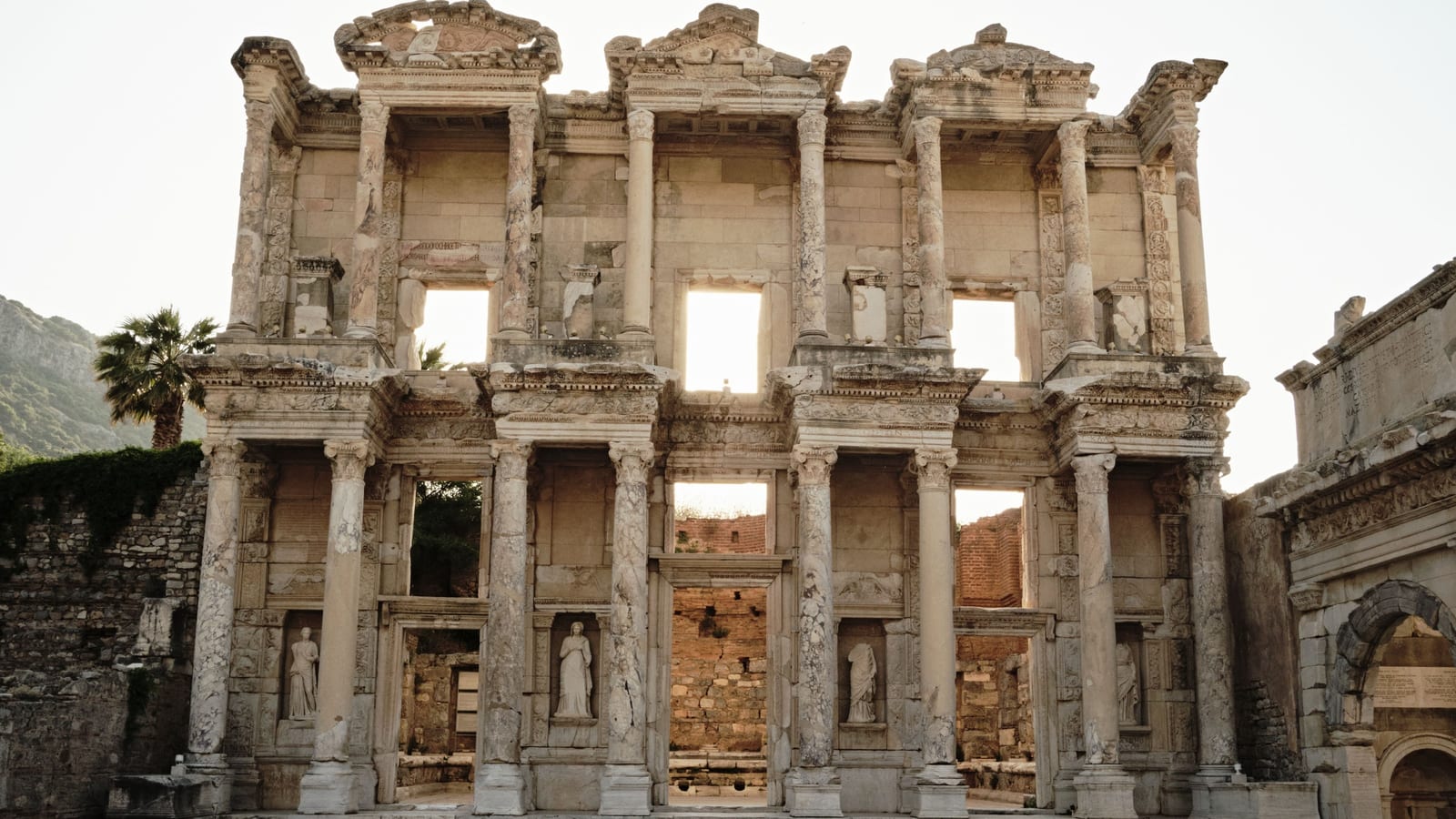
The standard Ephesus pronunciation is EF-uh-sus: three syllables, with the stress on the first, which is how both Merriam-Webster and the Cambridge Dictionary give it (/ˈef.ə.səs/). In Turkey the same place is Efes, said EH-fess, and on the ancient stones it is Greek, Ephesos, which Greeks today say EH-feh-sos.
We say the name all three ways before lunch. At the gangway it is Ephesus, to the driver it is Efes, and at the Library of Celsus, where the four virtues on the facade are still labeled in Greek, it slips into Ephesos. None of them is wrong: they are one name in three languages. This page is only about how each one sounds and how to spell it; what the name means, and where it came from, is on our Ephesus meaning page.
How do you pronounce Ephesus?
You pronounce Ephesus EF-uh-sus, in three syllables, with the stress on the first. The ph is an f, as in phone; the middle syllable is a light, quick uh; the ending sounds like the end of focus. Say it at the pace of emphasis, which has the same rhythm.
- EF: as in effort. This is the loud syllable.
- uh: barely there, like the a in sofa. Some references, Wikipedia among them, print it as a short i (/ˈɛfɪsəs/); at speaking speed the two are hard to tell apart.
- sus: soft and unstressed, like the end of focus.
- Run it together without a pause: EF-uh-sus.
The slip we hear most is e-FEE-sus, with the weight moved to the middle. It is an easy mistake, because the related word Ephesians really is stressed there. Nobody at the gate will mind, but EF-uh-sus is the pronunciation Merriam-Webster and Cambridge give, for American and British English alike.
Ephesus pronunciation in Turkish: Efes
Turkish shortened the name to two syllables and spells it exactly as it sounds: Efes, said EH-fess. Both vowels are the short e of bed, neither is drawn out, and the s is crisp, never a z. Like other two-syllable Turkish place names such as Izmir and Bodrum, it carries its light stress on the first syllable.
This is the form you will see once you land. The brown heritage signs on the roads from Kusadasi and Selcuk point to Efes; the Ministry of Culture and Tourism sells tickets for Efes Örenyeri, the Ephesus archaeological site; and the finds are in the Efes Müzesi, the Ephesus Museum in Selcuk. Say Efes to a taxi driver and you will be taken to the ruins; say Ephesus and most drivers will understand that too. Our Ephesus entrance fees page covers the tickets themselves.
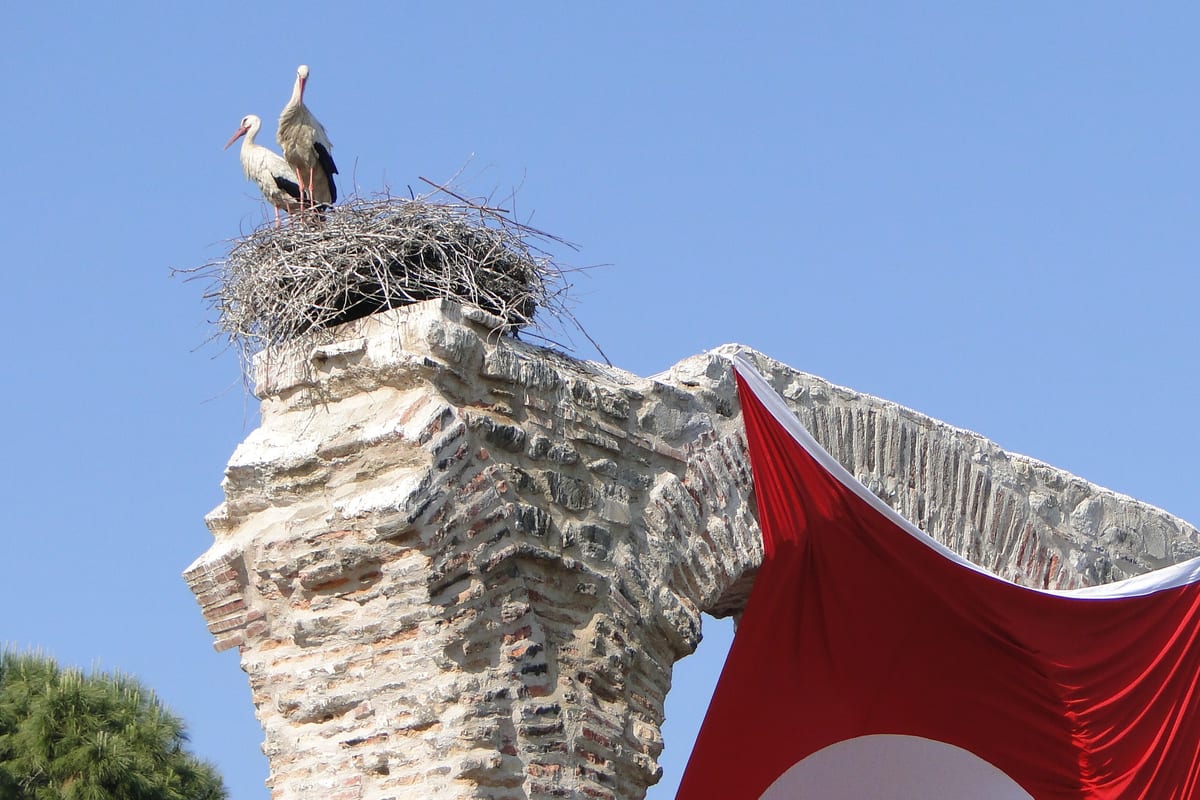
The beer is said the same way: Efes on the label is EH-fess, like the city. Why a brewery borrowed the name of an ancient city is a story for our page on the meaning of Ephesus, not this one. Everything else about modern day Ephesus and Selcuk has its own page too.
Ephesos: the Greek on the stones
The city's own name was Greek, written Ἔφεσος and romanized Ephesos. Archaeologists, museum labels and German-language books often keep that spelling, which is why you will meet Ephesos on some site plans, in the publications of the Austrian excavation and at the Ephesos Museum in Vienna.
In modern Greek it is Έφεσος, said EH-feh-sos, with the stress on the first syllable. Classical Greek sounded a little different: its φ was a p with a puff of breath after it, like the p in English pot. By Byzantine times that breathy p had softened into the f that Turkish later wrote down as Efes.
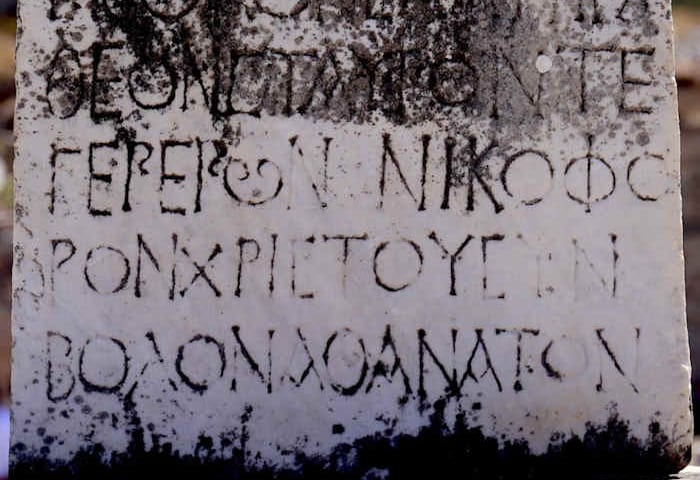
On the coins of Ephesus the name shrinks to two letters, Ε and Φ, set either side of a bee, and some issues spell out ΕΦΕΣΙΩΝ, "of the Ephesians". On site the Greek is everywhere once you know the alphabet. Beside Curetes Street, a fifth-century stone set up by a Christian named Demeas still reads, in its last lines, ΧΡΙΣΤΟΥ: "of Christ".
How do you spell Ephesus?
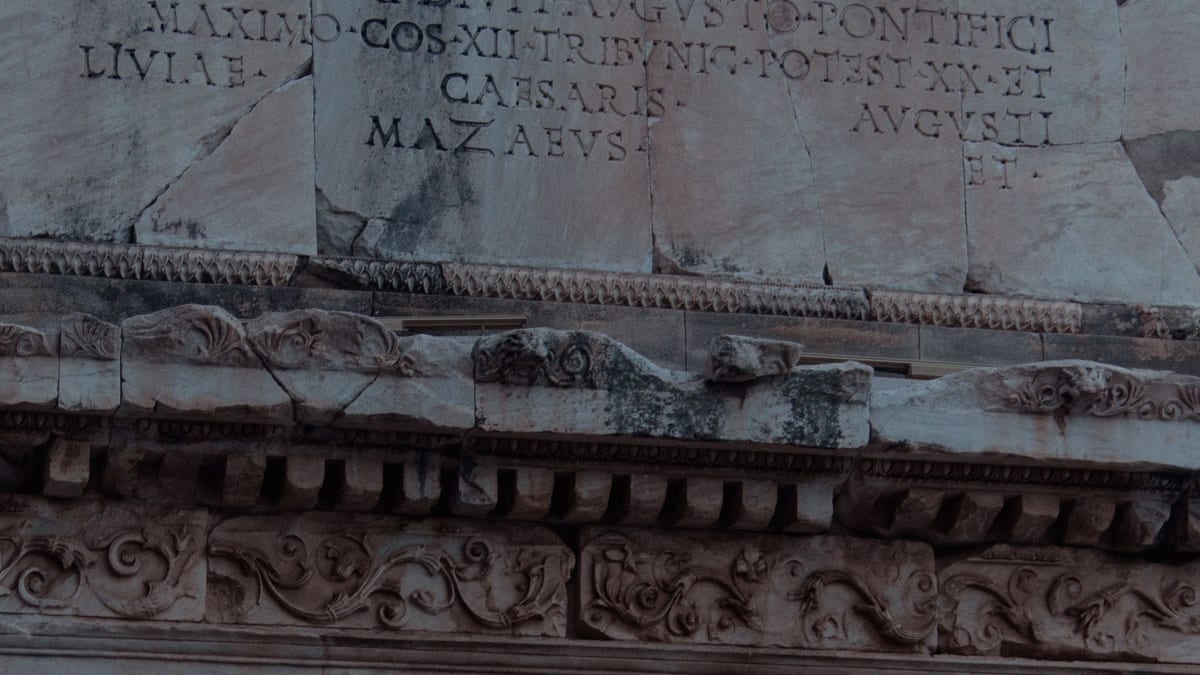
E-P-H-E-S-U-S: seven letters, with ph where you hear f, e in the second syllable and u in the last. The ph is Rome's doing. Latin wrote the breathy Greek φ as ph, the same habit that gave English philosophy and phone, and English kept the Latin spelling Ephesus unchanged. The Latin dedication on the Gate of Mazaeus and Mithridates, at the end of Marble Street beside the library, is the best place on site to see Roman capitals.
The misspellings in our own search data are Ephasus, Ephesis, Efesus and Ephusus, with the odd Ephaseus. The quickest fix is to think Ephes, then the Latin ending -us, the one that replaced the Greek -os.
| Spelling | Right or wrong | Say it |
|---|---|---|
| Ephesus | Right: English, from Latin | EF-uh-sus |
| Ephesos | Right: the Greek form, also German and archaeology | EH-feh-sos |
| Efes | Right: Turkish, on signs, tickets and the beer | EH-fess |
| Ephesians | Right: the people, and Paul's letter | ih-FEE-zhunz |
| Ephasus, Ephesis, Efesus, Ephusus | Misspellings | - |
How to pronounce Ephesus in the Bible, and Ephesians
In the Bible, Ephesus is pronounced exactly as above, EF-uh-sus; there is no separate church pronunciation to learn. The word that trips readers is Ephesians, said ih-FEE-zhunz (Merriam-Webster prints it \i-ˈfē-zhənz\). The stress jumps to the second syllable, as it usually does when English adds -ian to a name: Canada, Canadian; Ephesus, Ephesian.
If you are reading Acts 19 aloud, you meet both within a few verses. The crowd's chant, "Great is Diana of the Ephesians" in the King James Version and "Great is Artemis of the Ephesians" in most modern translations, is ih-FEE-zhunz. The city they chanted in, and "the church of Ephesus" in Revelation 2:1, is EF-uh-sus. Read the passage out loud once before the service and the switch becomes automatic.
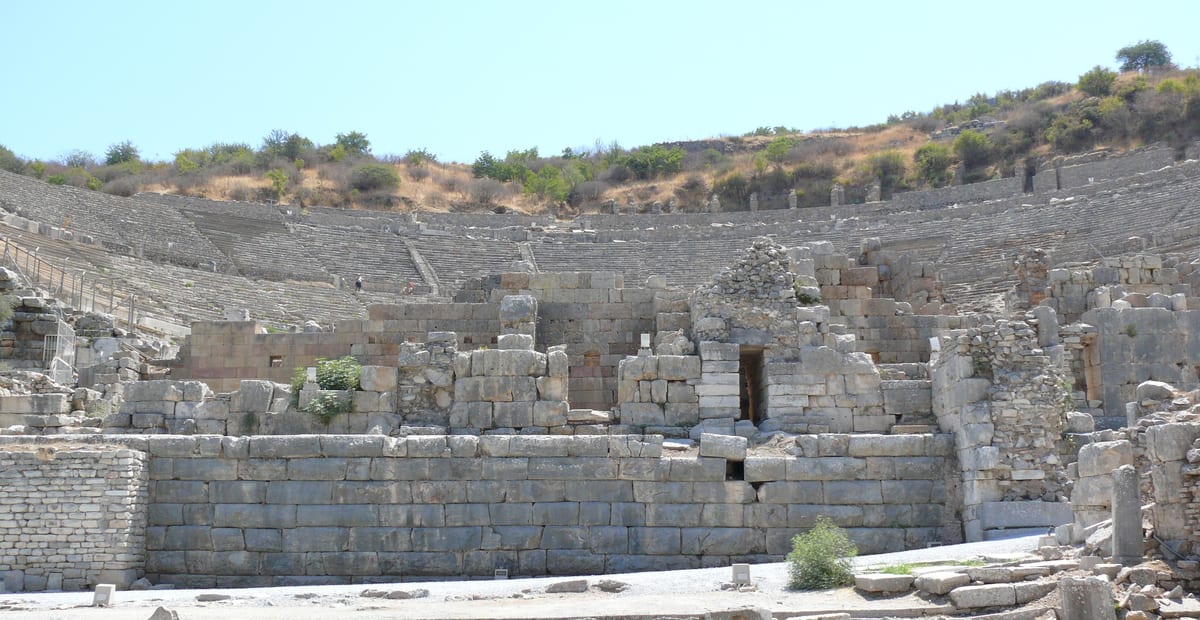
That chant went on for about two hours in the Great Theater, and the theater is still there. The full story of Paul's years in the city is in Paul in Ephesus, and our Biblical Ephesus tour reads it on the spot.
Hear the name on the day
On a tour day you hear all three forms before lunch. Cruise guests meet us at the Kusadasi gangway (the Kusadasi port page shows where), the driver says Efes, and the stones answer in Greek. Keep our printable Ephesus map on your phone; both gates are marked on it.
The easiest way to hear the name said properly, a few hundred times, is our Best of Ephesus tour: the ancient city, the House of the Virgin Mary and the Temple of Artemis in one private tour, with skip-the-line entry.
We reply to every inquiry within 24 hours, any day, and there is no prepayment.
Sources & further reading
- Merriam-Webster: Ephesus — American pronunciation \ˈe-fə-səs\, with audio
- Cambridge Dictionary: how to pronounce Ephesus — UK and US /ˈef.ə.səs/, with audio
- Merriam-Webster: Ephesians — pronunciation \i-ˈfē-zhənz\
- Wiktionary: Ἔφεσος — how the Greek name sounded from the classical to the Byzantine period
- Turkish Ministry of Culture and Tourism: Efes Örenyeri — the official Turkish name of the Ephesus archaeological site
Keep reading
See all Ephesus travel articlesEphesus Meaning: Origin of the Name and What Efes Means
What Ephesus means, where the name comes from, and what Efes means in Turkish, from guides who say it every day.
Modern Day Ephesus: Where It Is and What Is There Today
Where modern day Ephesus is (Selcuk, Izmir Province, Turkey), what it is called now, what stands there today and how to visit it.